
Echinodorus paniculatus
Echinodorus paniculatus
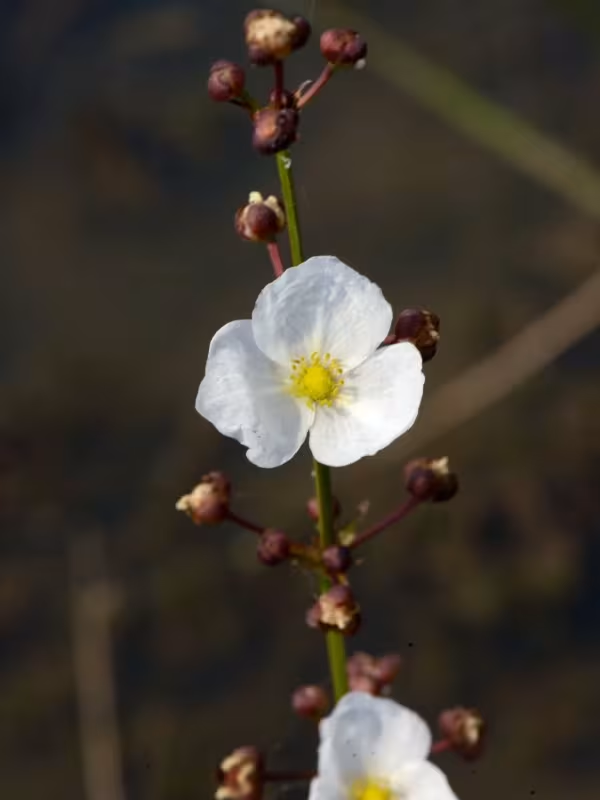
Description
Growing requirements
Echinodorus paniculatus is a perennial herbaceous plant belonging to the Alismataceae family. It is widely recognized as a versatile aquatic and semi-aquatic species, commonly used in professional aquascaping and indoor ornamental horticulture for its lush, elegant leaf rosettes.
The species originates from the tropical regions of South America. It typically grows in wetlands, along riverbanks, and in areas subject to seasonal flooding, which has contributed to its high adaptability to both submerged and emersed growing conditions in controlled environments.
Successful cultivation requires specific environmental parameters, including a stable water temperature ranging from 22°C to 28°C. The plant thrives in nutrient-rich substrates, as it relies heavily on its root system for nutrient uptake, necessitating the use of specialized mineral-rich soil or aquarium substrates.
Lighting is a critical component of the plant's growth cycle. High-intensity light for at least 10–12 hours daily is recommended to maintain the plant's compact growth habit and vivid leaf coloration. Inadequate lighting often results in etiolated growth and reduced structural integrity of the leaves.
The water chemistry should ideally be maintained at a neutral to slightly acidic pH level. Regular water changes are beneficial to prevent the accumulation of organic waste, which can lead to bacterial growth and affect the health of the rhizome and roots of the Echinodorus.
Main diseases and pests
Like many aquatic plants, Echinodorus paniculatus can be susceptible to iron deficiency, commonly manifesting as interveinal chlorosis. Regular application of chelated iron supplements directly into the substrate is often required to restore the deep green pigment in the leaves.
Algal blooms can pose a threat by competing for nutrients and light. Ensuring proper flow and not over-fertilizing the water column is essential to keep the plant free from epiphytic algae that can smother its foliage and stunt its overall development.
Harvesting
In commercial plant production, Echinodorus paniculatus is highly valued for its aesthetic appeal. It is propagated primarily through adventitious plantlets that emerge on the long inflorescence stalks. Once these plantlets develop a sufficient root system, they are harvested and separated for further cultivation.