
Engelmann's arrowhead
Sagittaria engelmanniana
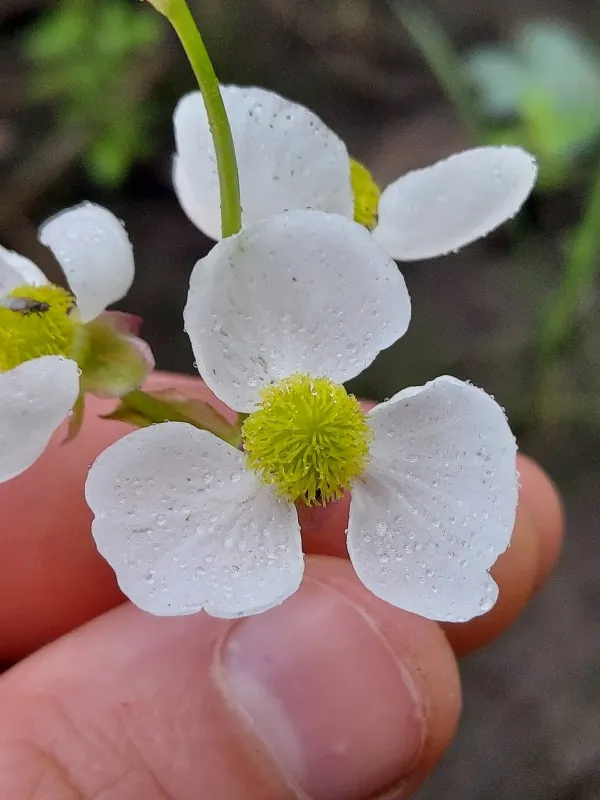
Description
Sowing dates
Sowing seeds of Engelmann's arrowhead is best performed in the spring season when the water temperatures have stabilized. The seeds typically require a period of stratification in cold, damp conditions to break dormancy and ensure high germination rates after sowing.
Vegetative propagation via division of rhizomes or stolons is a preferred method for commercial nurseries. This technique allows for faster establishment of the plant compared to seeds and ensures consistency in the traits of the resulting daughter plants.
When seeding, use a nutrient-rich substrate composed of silt, organic compost, and sand. Maintain the containers in a water-saturated state, keeping the water level exactly at the soil surface until the first true leaves emerge and begin to thrive.
Seedlings should be kept in protected environments until they reach a height of at least 10 centimeters. Early protection from herbivores and strong currents is essential for the survival of young, developing shoots in the nursery stage.
Transplanting into final aquatic locations is carried out once the risk of extreme temperature drops has passed. Proper spacing is required to allow each plant sufficient room to expand its root system and produce its characteristic arrowhead leaves.
Growing requirements
Engelmann's arrowhead is a member of the Alismataceae family, naturally found in wetland ecosystems across parts of North America. It is a perennial hydrophyte that performs best in shallow, nutrient-dense aquatic environments.
Light requirements are significant for this species; it prefers full sun or light shade to maximize photosynthesis. In adequate light, the plant develops its distinct vertical, arrow-shaped leaves which are its hallmark decorative feature.
Soil quality should mimic the plant's natural habitat, favoring acidic to neutral silt or clay-rich sediments. These soils provide the necessary anchoring strength for the roots while ensuring steady access to dissolved minerals and organic matter.
The hydrological conditions must be stable, with water depths typically ranging from 15 to 45 centimeters. While the species can tolerate minor fluctuations in water levels, constant saturation is vital to avoid desiccation of the crown.
Temperature plays a crucial role in growth cycles, with the species thriving in temperate water conditions. Ideal water temperatures for rapid vegetative expansion and flowering are between 18 and 26 degrees Celsius.
Main diseases and pests
The primary threats to the health of Engelmann's arrowhead include fungal pathogens that develop in stagnant, low-oxygen water. These pathogens often target the rhizome system, leading to rapid decay if the water quality is not maintained.
Pests, such as various aquatic snails and insect larvae, may feed on the foliage, leaving necrotic patches. While the plant can withstand minor browsing, heavy infestations require manual removal or the introduction of natural predators.
Leaf spot diseases are common when humidity is high and airflow across the leaf surface is restricted. Improving the ventilation around the plants and removing decaying organic matter from the water can mitigate these risks effectively.
Competition from aggressive wetland weeds, such as invasive grasses or duckweed, can significantly stunt the growth of the arrowhead. Regular site maintenance is essential to prevent the smothering of young colonies.
- Regular monitoring of water chemistry and pH levels.
- Manual removal of encroaching invasive vegetation.
- Application of biological controls for pest management.