
Bleher's Amazon Sword
Echinodorus bleherae
Description
Growing requirements
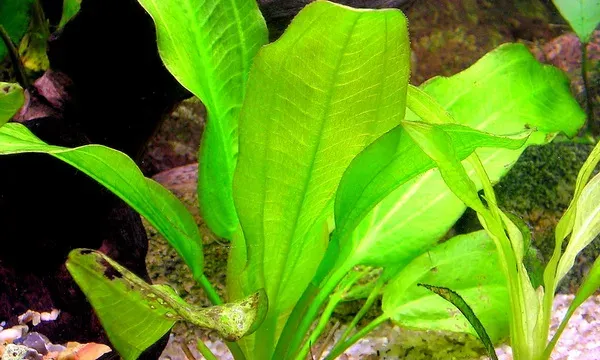
Echinodorus bleherae, commonly known as Bleher's Amazon Sword, belongs to the Alismataceae family. It is a robust aquatic plant native to the tropical regions of South America.
Successful cultivation requires stable temperatures between 22°C and 28°C. This species thrives in environments where thermal fluctuations are kept to a minimum to ensure consistent leaf development.
The root system of this plant is extensive and requires a nutrient-rich, deep substrate. Using iron-rich fertilizers in the substrate is highly recommended to maintain vigorous growth.
Lighting should be moderate to strong to prevent the plant from becoming leggy. Providing a photo-period of 10 to 12 hours daily is essential for maintaining deep green, healthy foliage.
Water parameters such as pH and hardness are relatively flexible, but the plant performs best in neutral to slightly acidic conditions with adequate water circulation.
Yield
In aquaculture, yield is measured by the propagation of daughter plantlets. The mother plant produces long flower stalks from which new rosettes emerge.
Under optimal greenhouse conditions, a single healthy specimen can produce several daughter plants throughout the vegetative growth phase, allowing for efficient scaling.
The commercial value of this culture depends on the size and root development of the rosettes, which are harvested once they reach a suitable size for transplantation.
Strategic pruning of old leaves helps the plant divert energy into the production of new offspring, significantly increasing the total yield per square meter.
Maintaining high humidity and CO2 supplementation in terrestrial-style greenhouse setups can significantly accelerate the growth cycle compared to fully submerged systems.
Main diseases and pests
The most common threat to this plant is the invasion of algae on its large leaves, which occurs due to an imbalance between light duration and nutrient availability.
Snails represent a potential biological threat, as they can consume young tissue, leading to aesthetic damage and vulnerability to secondary infections.
Improper substrate composition often leads to root rot, especially if the soil is too compact and lacks the oxygen necessary for healthy root respiration.
Nutrient deficiencies, particularly iron or potassium, typically manifest as chlorosis or yellowing of the foliage, requiring immediate adjustments to the fertilization regime.
Preventive maintenance includes regular inspection of the leaves, removal of decaying organic matter, and maintaining stable water quality to inhibit the growth of pathogens.