
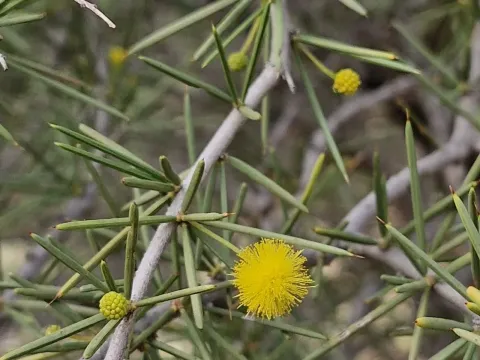
Acacia tetragonophylla
Acacia tetragonophylla
Acacia tetragonophylla, commonly known as "dead finish," belongs to the Fabaceae family. As a hardy arid-zone species, its seeds possess a physical dormancy, which necessitates mechanical scarification or treatment with boiling water prior to sowing to ensure uniform germination.
What the section contains
Acacia tetragonophylla
The optimal sowing season is late winter or early spring, provided soil temperatures are stable between 20°C and 25°C. Proper moisture must be maintained in the substrate until the seedlings establish their primary root system.
In cultivation, seedlings are usually raised in containers to ensure high survival rates upon transplanting. The nursery stage typically lasts for 6 to 12 months until the saplings reach sufficient size and toughness.
Field planting requires careful spacing, typically 2 to 3 meters apart, to mitigate competition for scarce subterranean water resources. This spacing is essential for maintaining plant vigor in arid conditions.
Once established, the plant exhibits remarkable self-regeneration capabilities. It is well-adapted to native habitats, and in agricultural settings, it requires minimal intervention after the initial establishment phase.
This species is highly adapted to the hot, arid environments of Australia. It exhibits extreme tolerance to moisture deficit and thrives in regions characterized by infrequent and irregular rainfall patterns.
The ideal soil conditions for the cultivation of this species include well-drained, sandy, or loamy soils. Its ability to fix nitrogen in symbiosis with rhizobia allows it to flourish in nutrient-poor substrates.
Full sun exposure is vital for the health and development of the plant. It is intolerant of waterlogging, which often leads to root fungal infections; therefore, elevated or well-sloped sites are preferred.
Temperature fluctuations, common in its natural range, do not negatively impact the adult plant. It is a highly resilient shrub capable of sustaining itself in harsh, desert-like climates without supplementary irrigation.
The species serves as an effective windbreak and soil stabilizer. Its deep root architecture is highly beneficial in preventing wind erosion in regions prone to dust storms and desertification.
The primary agricultural utility of Acacia tetragonophylla is as a supplementary source of forage for livestock. Its foliage remains green during periods of drought, providing essential protein and roughage when pasture availability is low.
The productivity is largely dependent on available soil moisture and the age of the shrubs. While it does not provide high-volume yield, its reliability as a perennial feed resource is highly valued in arid livestock management.
Seeds of the species have historical importance as a food source. When processed correctly, they are nutrient-dense and serve as a survival food in indigenous agricultural traditions.
The timber is characterized by its significant density and durability. While growth rates are slow, the wood is occasionally utilized for artisanal crafts, tool handles, and as high-quality firewood.
Sustainable harvest of the biomass is critical to ensure the long-term viability of the plants. Strategic pruning practices allow farmers to utilize the shrub as a renewable resource over extended periods.
Acacia tetragonophylla exhibits a robust natural immunity to most diseases, attributed to its defensive secondary metabolites. It is rarely impacted by the common pathogens that affect intensive crop species.
Young plants are susceptible to browsing by herbivores, including rabbits, kangaroos, and livestock. Implementing physical barriers or tree guards is often necessary during the initial stages of field establishment.
Root rot is the most significant threat to the species, almost exclusively linked to poor drainage or over-irrigation. Proper site selection and water management are sufficient to eliminate this risk entirely.
Insect pests, such as aphids, might colonize new growth in the spring, but they typically do not pose a threat to the overall health of established trees. Natural predators in the ecosystem generally regulate pest populations.
The species requires no pesticide or fungicide applications, highlighting its potential for sustainable, low-input agricultural systems in dryland areas.