
Acacia tenuispina
Acacia tenuispina
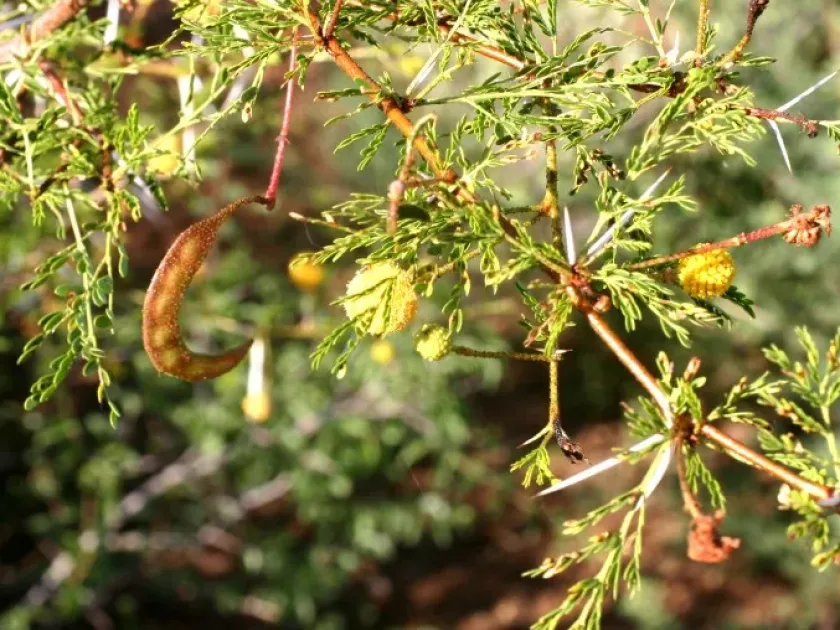
Description
Sowing dates
Sowing Acacia tenuispina seeds requires effective scarification of the hard seed coat to ensure uniform germination rates.
The optimal planting window corresponds with the beginning of the rainy season to provide sufficient moisture for root development.
Seeds should be sown at a depth of 2-3 centimeters in well-prepared soil to ensure good contact and protection from surface heat.
Containerized nursery production is highly recommended to protect the taproot and facilitate successful field establishment.
Spacing requirements vary by site purpose, with wider rows recommended for shelterbelts to reduce inter-plant competition for water.
Growing requirements
Acacia tenuispina belongs to the Fabaceae family and is specifically adapted to arid and semi-arid environments.
The species demonstrates superior tolerance to intense heat and prolonged dry spells, making it suitable for marginal lands.
Well-drained, sandy, or loamy soil types are preferred, as the species is highly sensitive to waterlogged conditions.
High sunlight exposure is a primary requirement for the plant to thrive; therefore, open sites are essential for optimal growth.
As a legume, this species enhances soil nutrient content by fixing atmospheric nitrogen, aiding in the rehabilitation of poor soils.
Yield
The primary utility of this plant lies in its ability to reclaim degraded lands and mitigate soil erosion in fragile ecosystems.
Its wood is recognized for its density, serving as an excellent source of high-quality charcoal for local energy needs.
Foliage and succulent pods provide a supplementary forage source for livestock during peak drought periods.
The species acts as a vital honey-producing plant, sustaining pollinator populations in otherwise barren landscapes.
Economic returns are best achieved through sustainable harvest practices that maintain the integrity of the ecosystem.
Main diseases and pests
Young plants are particularly vulnerable to browsing by small mammals, necessitating protective measures during the early establishment phase.
Over-irrigation or stagnant water in the root zone can trigger fungal infections, leading to irreversible plant decline.
Various insect pests, such as aphids or borers, may infest the leaves and stems, requiring integrated pest management.
Uncontrolled grazing is the most significant threat to the survival of young plantations and natural regeneration efforts.
Parasitic plant encroachment can stress mature trees, reducing their vigor and overall biomass production capacity.
Harvesting
Seed collection should take place when pods are fully mature and turn brown, indicating readiness for drying.
Timely harvest is critical to prevent natural dehiscence, which would result in seed loss across the field floor.
Stored seeds must be kept in a cool, dry environment to maintain viability for future sowing campaigns.
Sustainable wood harvest is managed through selective thinning, which encourages new growth and keeps the stand healthy.
Forage utilization involves controlled pruning of lateral branches, ensuring the central stem remains intact for future production.