
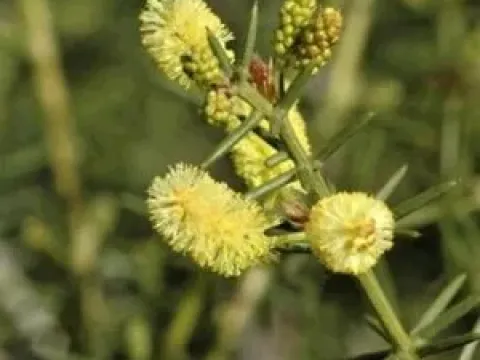
Acacia tenuifolia
Acacia tenuifolia
Sowing Acacia tenuifolia requires careful preparation of seeds. Scarification of the seed coat is essential to overcome dormancy and ensure uniform germination, as seeds have a hard structure designed to withstand harsh environmental conditions.
What the section contains
Acacia tenuifolia
In professional nursery settings, seeds are often sown in deep trays or containers. Using a well-draining soil mix enriched with specific rhizobia bacteria ensures that seedlings develop the necessary symbiotic structures for nitrogen fixation from an early stage.
Optimal planting depth ranges from 1 to 2 centimeters. Maintaining consistent soil moisture during the germination phase is critical, though one must avoid waterlogging to prevent seed rot before the primary root emerges.
When transplanting into the field, a spacing of 2 to 3 meters is recommended to provide each tree with sufficient light and nutrients. This layout also accommodates mechanical equipment for weeding and maintenance during the first years of growth.
Temperature management during the establishment phase is key. Seeds and young seedlings thrive in warm environments with steady temperatures above 20 degrees Celsius, avoiding any exposure to sudden cold snaps or frost.
Belonging to the Fabaceae family, Acacia tenuifolia is highly valued for its ability to fix atmospheric nitrogen. This ecological trait makes it an ideal candidate for agroforestry systems aimed at enhancing soil fertility without heavy fertilizer inputs.
The plant thrives in full sun exposure and prefers well-drained, sandy, or loamy soil types. It is exceptionally resilient in drought-prone areas, making it a reliable choice for land rehabilitation in tropical and subtropical climates.
Climatic requirements are strict regarding frost sensitivity; the species performs best in regions where temperatures remain consistently warm year-round. It is not suitable for temperate zones with freezing winters.
The soil structure should be loose and aerated. Heavy clays may inhibit root development, so improving soil structure through tillage or drainage is recommended before establishing a long-term plantation.
This species is extensively used for erosion control. Its robust and deep root system effectively stabilizes slopes and prevents soil degradation, serving as a functional barrier against heavy tropical rainfall and wind erosion.
The productivity of Acacia tenuifolia is measured by both timber volume and biomass production. It is a fast-growing species that allows for sustainable harvesting cycles in managed agricultural landscapes.
The foliage provides a valuable source of green manure, which can be incorporated into the soil to improve its organic matter content. Its high nitrogen content makes it an excellent supplement for restoring exhausted farmlands.
In addition to biomass, the tree produces pods containing seeds, which can be harvested for future propagation. Yield consistency usually stabilizes after the trees reach their reproductive maturity around the third or fourth year.
The wood is utilized for small-scale construction, tool handles, and as a durable fuel source for rural households. Its density and strength make it a practical material for various on-farm applications.
Proper canopy management and regular thinning are crucial to maximize overall yield. Removing dead wood and ensuring adequate spacing allows for sustained growth rates throughout the tree's productive lifespan.
The primary threats during the early growth stage include soil-borne pests such as white grubs, which can devastate young root systems. Pre-planting site treatment or the use of targeted biological controls is recommended to protect the crop.
Fungal pathogens pose a risk when humidity levels remain high for extended periods, particularly in the rainy season. Good air circulation and keeping the area around the base of the tree clear are effective preventive measures.
Defoliating insects can negatively impact growth by reducing the plant's photosynthetic capacity. Monitoring the plantation for leaf damage is essential for timely intervention and integrated pest management.
Vigilance against stem borers is also required, as these pests can weaken the structural integrity of the main trunk, making the trees susceptible to wind damage.
Common pests and diseases:
- White grubs (Scarabaeidae)
- Aphids
- Stem borers
- Root rot (Phytophthora)
- Powdery mildew