
Acacia rigidula
Acacia rigidula
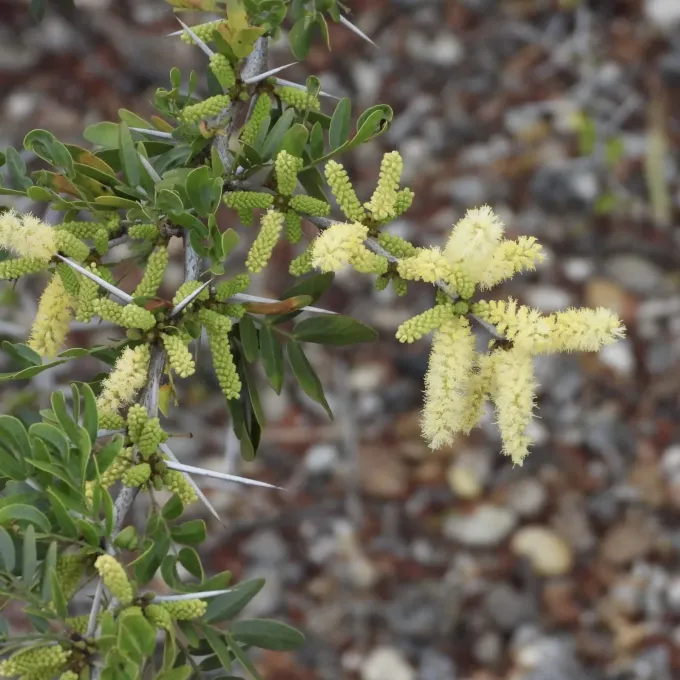
Description
Growing requirements
Acacia rigidula, commonly known as Blackbrush acacia, is a perennial shrub or small tree belonging to the Fabaceae family. It is native to the arid and semi-arid regions of northern Mexico and southern Texas, where it thrives in extreme environmental conditions.
Botanically, the plant is classified as a xerophyte, showing remarkable adaptations to drought, such as reduced leaf surface area and the presence of thorns. It typically grows as a dense, woody shrub reaching heights of 3 to 5 meters depending on environmental factors.
Regarding climate and soil requirements, the species prefers well-drained, alkaline, and rocky soils. It is highly intolerant of waterlogged conditions, making site selection critical for successful cultivation. It requires full sunlight to maintain its structural health and blooming potential.
The agricultural significance of this plant is primarily rooted in its role as a high-quality honey producer. Bees foraging on Acacia rigidula flowers produce a sought-after, light-colored honey, making it an essential crop for apiculture in its native range.
Beyond apiculture, the plant serves as a vital forage source for both livestock and wildlife, particularly during dry seasons when other vegetation becomes scarce. Its wood is also utilized in artisanal woodcraft due to its density and texture.
Main diseases and pests
Diseases affecting Acacia rigidula are generally limited, as it is a resilient wild species. However, when introduced to managed areas, it can suffer from root-related fungal infections if irrigation strategies result in standing water around the root collar.
Insect pests include various beetles and defoliators that feed on the foliage and new growth. In most cases, these pests do not reach threshold levels that require chemical intervention, as the plant exhibits strong natural resilience and seasonal dormancy patterns.