
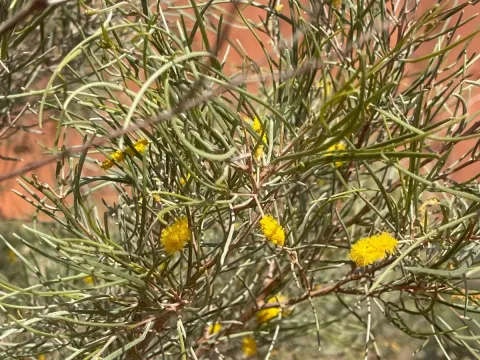
Mulga
Acacia aneura
Sowing Mulga typically involves using seeds that require scarification to enhance germination rates. The optimal time for sowing is immediately following the start of the rainy season, which ensures adequate moisture levels for the seeds to sprout effectively.
What the section contains
Mulga
In its natural habitat, Acacia aneura propagates through seeds following wildfire events or heavy seasonal rainfall. For agricultural purposes, seeds are sown into a prepared seedbed or directly into the soil at a depth of 1 to 2 centimeters.
Maintaining moderate soil moisture during the first few months of a seedling's life is essential, as young plants are highly vulnerable to water deficits. The growth rate of Mulga in the early stages is quite slow, making weed control crucial.
The spacing between plants depends on the intended use, typically ranging from 2 to 5 meters. Denser plantations are often used for windbreaks, while wider spacing is preferred for grazing management and pastoral systems.
Transplanting young trees from a nursery into open fields must be performed with extreme care to avoid damaging the taproot, as this root structure is critical for the long-term survival and stability of the tree.
Mulga is an evergreen tree or large shrub belonging to the Fabaceae family, widely distributed across the arid interior of Australia. This plant is uniquely adapted to extreme environments where annual rainfall is often minimal and unpredictable.
The crop prefers well-drained sandy, loamy, or stony soils, yet it is capable of surviving in nutrient-poor substrates. It possesses a sophisticated root system that allows it to tap into moisture deep within the soil profile.
Acacia aneura is exceptionally resilient to high temperatures and prolonged droughts, making it an indispensable plant for arid zone land management. The optimal temperature range for development is between 20 and 35 degrees Celsius.
The plant possesses a unique ability to photosynthesize under stress while practicing strict water conservation. Its leaves, which are modified phyllodes, are designed to minimize moisture loss, serving as a vital adaptive mechanism.
Exposure to full sunlight is essential, as the culture is highly heliophilic and struggles to survive even partial shading over extended periods. In the shade, the trees lose their characteristic canopy density and significantly slow their development.
The agricultural use of Mulga is primarily focused on providing high-protein fodder for livestock during drought periods. The phyllodes are rich in nutrients, making them a critical feed source for sheep and cattle when other pastures fail.
The yield of green biomass depends on the age of the trees and planting density, but harvesting must be managed carefully to ensure tree longevity. Strategic pruning of the canopy stimulates the growth of fresh foliage for future seasons.
Beyond its value as fodder, the plant is used for soil stabilization, effectively preventing wind erosion in desert and semi-desert regions. The root network of Mulga binds soil particles, fostering a stable vegetation cover.
The timber of this species is renowned for its high density and strength, finding utility in the production of tools, fencing, and construction of farm infrastructure. It is exceptionally durable and naturally resistant to insect infestation.
Seed harvesting is conducted from mature trees and is used either for replenishing plantations or as a supplement in livestock feed mixes. Seeds are typically collected by hand or by shaking branches onto tarps after the pods have matured.
The primary diseases of Mulga are usually associated with fungal infections of the root system triggered by waterlogging, which occurs rarely but can be fatal to the plant. Proper site selection to avoid water accumulation is vital.
Pests, such as weevils and various caterpillar species, may damage foliage and seeds, impacting overall productivity. However, due to the high tannin content in its tissues, the tree maintains a significant natural defense against most insects.
The greatest threat to young trees comes from herbivores like kangaroos or livestock, which can completely destroy young shoots. Fencing areas during the early stages of growth is an essential requirement for successful establishment.
Parasitic plants, such as mistletoe, may settle on Mulga branches, drawing nutrients and gradually weakening the tree. Regular inspection of the canopy helps in identifying and removing affected areas to maintain tree health.
Long-term changes in precipitation patterns can potentially reduce tree vigor, making them more susceptible to pathogens. Healthy trees under proper management protocols demonstrate remarkably high resilience against most environmental threats.