
Howitt's wattle
Acacia howittii
Description
Growing requirements
Howitt's wattle (Acacia howittii) is an evergreen tree belonging to the Fabaceae family, native to a restricted range in the Gippsland region of Victoria, Australia.
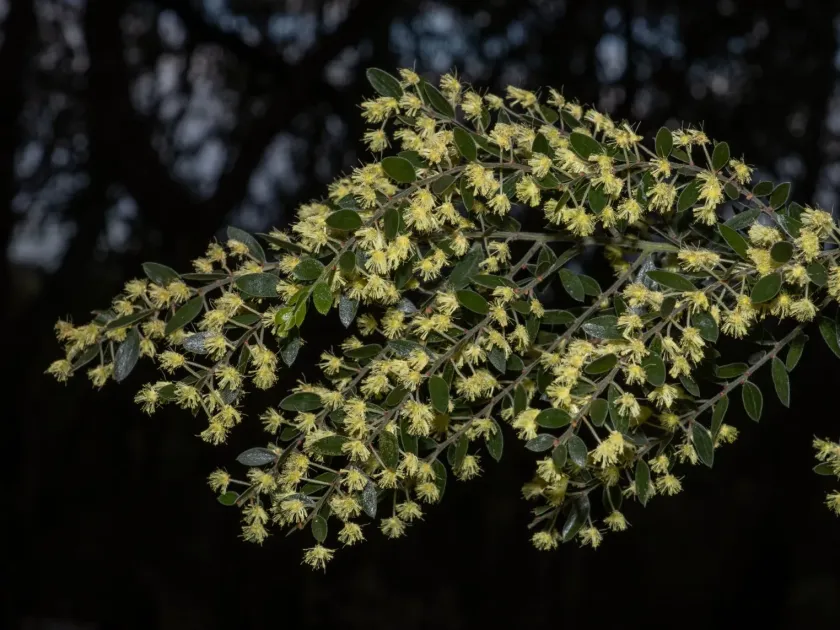
The plant is highly valued in ornamental horticulture for its graceful, weeping habit and small, olive-green phyllodes that provide a dense and attractive foliage texture throughout the year.
It thrives best in well-drained soils that are slightly acidic to neutral, requiring an open, sunny aspect to maintain its structural form and encourage dense growth.
In terms of climate, the species is relatively adaptable but performs optimally in regions with mild temperatures, as it does not have high tolerance for severe frost or prolonged freezing conditions.
Good agricultural practices include providing adequate space for the tree to spread its weeping branches and applying organic mulch to retain soil moisture while suppressing weeds.
Main diseases and pests
The primary agricultural threat to Acacia howittii is root rot caused by Phytophthora species, which often occurs in waterlogged soil environments.
Pest issues generally involve sap-sucking insects like scale insects, mealybugs, and aphids that may cluster on the stems and young phyllodes, potentially leading to stunted development.
Poor airflow within the canopy can contribute to the growth of sooty mold, a fungus that thrives on the honeydew excreted by the aforementioned sap-sucking pests.
Managing these threats requires monitoring for signs of stress, such as yellowing leaves or thinning branches, and applying targeted horticultural oils or insecticides when necessary.
- Maintain good hygiene around the base of the plant.
- Avoid over-fertilizing to prevent rapid, weak growth that attracts pests.
- Ensure proper drainage to minimize risk of root infection.