
Oleander-leaved acacia
Acacia neriifolia
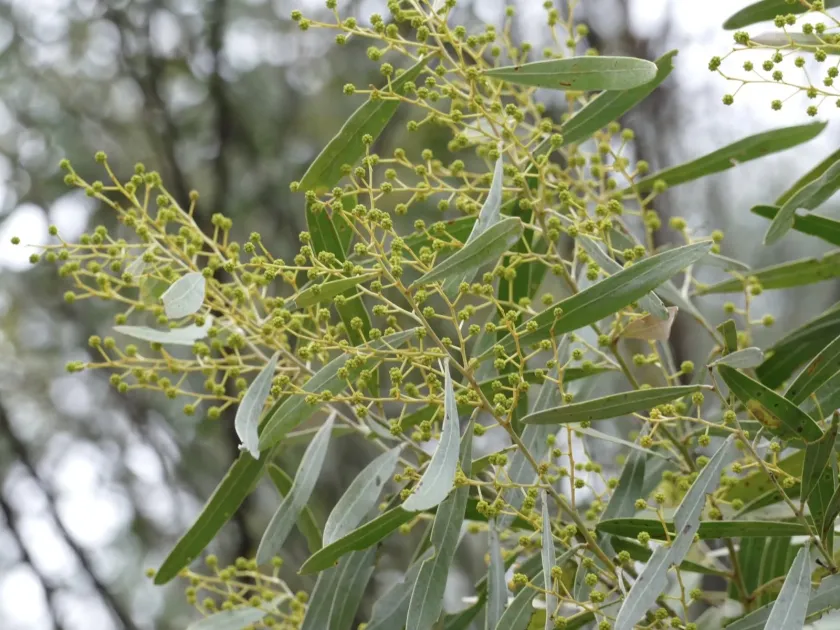
Description
Sowing dates
Propagating the oleander-leaved acacia is most effectively achieved through seeds. Due to their hard seed coat, scarification is a mandatory step to ensure successful germination.
Seeds should be sown in a well-draining substrate, maintaining a temperature range of 20–25 degrees Celsius. Early spring is the most suitable time for starting the seedlings.
Cuttings from semi-hardwood can also be used for reproduction. This technique requires rooting hormones and a controlled environment with high humidity to prevent the cuttings from drying out.
Once the seedlings develop their first true leaves, they should be transplanted into individual containers. Avoid damaging the taproot during this process to ensure long-term health.
Acclimatization to outdoor conditions is a necessary step before final planting. Gradual exposure to sunlight and fluctuating temperatures helps harden the plants against environmental stress.
Growing requirements
As a member of the Fabaceae family, Acacia neriifolia is native to Australia. It thrives in full sunlight, which is essential for developing its distinct foliage and healthy growth habit.
The species is highly versatile regarding soil types, performing exceptionally well in sandy or loamy soils that possess excellent drainage properties.
The plant is famously drought-tolerant once established. It utilizes phyllodes, which are modified leaf stalks, to minimize water loss, making it ideal for xeriscaping projects.
Protection from severe frost is crucial. In regions where temperatures drop significantly below freezing, the acacia should be grown in containers to facilitate winter storage in warmer areas.
Proper aeration is vital for the root system. Waterlogging must be strictly avoided, as the roots are highly susceptible to rot when kept in saturated soil for extended periods.
Main diseases and pests
Common pests include spider mites and mealybugs, which are particularly troublesome when the plant is kept in dry, indoor environments without proper air circulation.
Root rot remains the most significant threat to the plant's survival. This condition is primarily caused by poor drainage or overwatering, often leading to rapid decline.
Aphids may occasionally attack fresh spring growth. Early intervention with insecticidal soaps or systemic treatments is effective in managing these infestations.
Fungal issues, such as powdery mildew, can appear if the plant is kept in stagnant, humid air. Good spacing and regular pruning help improve ventilation within the canopy.
Maintaining balanced nutrition is important, as nutrient-deficient plants are significantly more vulnerable to secondary infections and pest attacks throughout the growing season.
Harvesting
In terms of practical use, Acacia neriifolia is primarily valued as an ornamental tree or shrub. It serves as a beautiful accent in landscapes and is perfect for dry garden themes.
Seed harvesting is conducted when the pods turn brown and dry. The pods should be collected just before they naturally split open to prevent the loss of seed material.
While the wood is durable, the species is not typically used for industrial timber production. Small-scale crafting and artisan woodworking are the primary uses for the timber.
Routine pruning is necessary to maintain a dense, attractive canopy. Pruning also helps in removing dead branches and keeping the overall structure of the tree healthy.
The species provides ecological benefits by attracting pollinators during its flowering season, contributing to the biodiversity of the garden or local ecosystem.