

Reference · Crops
Juniper
Juniperus L.
The propagation of Juniper is primarily carried out through vegetative methods, specifically cuttings, to ensure the preservation of varietal characteristics. Cuttings are best harvested during the spring or late summer, selecting healthy, semi-hardwood shoots from mature plants.
20
items
What the section contains
 Chinese juniper
Juniperus chinensis L.
Chinese juniper
Juniperus chinensis L. x Juniperus virginiana L.
Chinese juniper
Juniperus chinensis L.
Chinese juniper
Juniperus chinensis L. x Juniperus virginiana L.
 Creeping juniper
Juniperus horizontalis Moench
Creeping juniper
Juniperus horizontalis Moench
 East African juniper
Juniperus procera Hochst. ex Endl.
East African juniper
Juniperus procera Hochst. ex Endl.
 Eastern red cedar
Juniperus virginiana L.
Eastern red cedar
Juniperus virginiana L.
 Flaky juniper
Juniperus squamata Buch.-Ham. ex D. Don
Flaky juniper
Juniperus squamata Buch.-Ham. ex D. Don
 Juniper
us communis L.
Juniper
Juniperus communis L.
 Juniperus communis depressa
Juniperus communis L. var. depressa Pursh
Juniperus communis depressa
Juniperus communis L. var. depressa Pursh
 Juniperus semiglobosa
 Regel
Juniperus semiglobosa
Juniperus semiglobosa Regel
 Pfitzer juniper
Juniperus x pfitzeriana (Späth) P. A. Schmidt
Pfitzer juniper
Juniperus x pfitzeriana (Späth) P. A. Schmidt
 Phoenicean juniper
Juniperus phoenicea L.
Phoenicean juniper
Juniperus phoenicea L. subsp. turbinata (Guss.) Nyman
Phoenicean juniper
Juniperus phoenicea L.
Phoenicean juniper
Juniperus phoenicea L. subsp. turbinata (Guss.) Nyman
 Ping's Juniper
Juniperus pingii W. C. Cheng
Ping's Juniper
Juniperus pingii W. C. Cheng
 Prickly juniper
Juniperus oxycedrus L.
Prickly juniper
Juniperus oxycedrus L.
 Rocky Mountain juniper
Juniperus scopulorum Sarg.
Rocky Mountain juniper
Juniperus scopulorum Sarg.
 Savin juniper
Juniperus sabina L.
Savin juniper
Juniperus sabina L.
 Shore juniper
Juniperus conferta Parl.
Siberian Juniper
Juniperus communis L. var. saxatilis Pall.
Shore juniper
Juniperus conferta Parl.
Siberian Juniper
Juniperus communis L. var. saxatilis Pall.
 Spanish juniper
Juniperus thurifera L.
Spanish juniper
Juniperus thurifera L.
 Turkestan juniper
Juniperus pseudosabina Fisch. & C. A. Mey.
Turkestan juniper
Juniperus pseudosabina Fisch. & C. A. Mey.
Marketplace
Products in this section · 3


Juniper
Seed propagation is less common in commercial nurseries due to the complex dormancy mechanism of juniper seeds. They require a prolonged stratification period, often lasting over a year, to successfully break dormancy and achieve viable germination rates.
When sowing seeds, they are typically planted in specialized substrate trays and kept in controlled environments to prevent desiccation. The soil must remain consistently moist but not waterlogged, as seeds are prone to fungal decay during the long waiting period.
Cuttings should be treated with root-promoting hormones to maximize the percentage of successful strikes. Once placed in a well-aerated propagation medium, they require consistent humidity and temperature control to develop a robust root system before transplanting.
Young seedlings and rooted cuttings are often kept in containers for the first few seasons. This allows nursery managers to manage nutrient application and prevent the damage often caused by intense weather conditions in the early growth stages.
Juniper belongs to the Cupressaceae family and is known for its remarkable adaptability to various soil types. These plants thrive in well-drained, sandy, or rocky soils and are generally tolerant of low-nutrient environments, making them ideal for xeriscaping.
The most critical environmental requirement for healthy Juniper growth is excellent drainage. While they are hardy, they are highly susceptible to root rot if water accumulates around the root zone, necessitating careful site selection or the use of raised planting beds.
Sunlight is another fundamental requirement for this genus. Most Juniper species are obligate photophiles; in shaded conditions, their growth becomes sparse, and they may lose their dense, aesthetic structure, becoming increasingly prone to disease.
These plants are highly resilient to both extreme cold and drought once they have established a deep root system. Their ability to handle wide temperature fluctuations allows them to be cultivated across a diverse range of climatic zones globally.
Soil pH preference varies slightly by species, but most Junipers thrive in slightly acidic to neutral soil. They generally do not require heavy fertilization, as over-fertilization can lead to weak, rapid growth that is more susceptible to insect infestations.
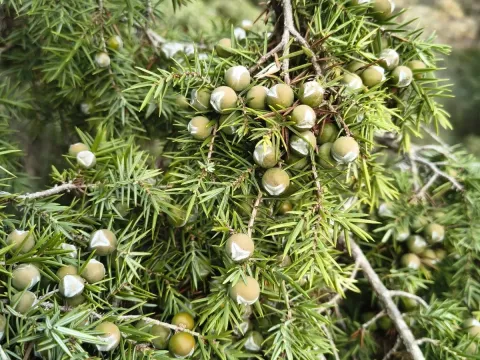
The commercial harvest of Juniper is centered on its versatile utility, primarily involving the collection of female cones, often referred to as "juniper berries." These are utilized extensively in the beverage industry, specifically for flavoring gins, and in traditional medicine.
Harvesting is usually conducted in the autumn when the berries reach their deep purple or blue stage. On a commercial scale, mechanical shakers or manual collection methods are employed to gather the fruit from managed plantations.
Juniper wood is highly valued for its durability, resistance to rot, and pleasant aromatic properties. It is often harvested for small-scale woodworking, crafting, and cabinetry, providing a niche but valuable output for those managing woody stands.
In the nursery sector, the primary yield consists of container-grown shrubs or field-grown stock for landscape architecture. Success here is measured by the uniform shape of the canopy, color density, and overall plant vigor as appraised by market standards.
Environmental services provided by Juniper plantations, such as soil stabilization on slopes and the provision of bird habitats, are indirect but significant yields that improve the overall ecological quality of agricultural lands where the plants are integrated.
Juniper blight, specifically that caused by the fungus Phomopsis, is a significant threat that results in the dieback of branch tips. It spreads rapidly in moist conditions and can cause serious canopy loss if not managed with proper pruning and fungicides.
Rust diseases caused by Gymnosporangium fungi create distinct, gall-like structures on stems and foliage. These infections can drastically reduce the market value of decorative plants and should be managed by removing affected branches immediately.
Spider mites are a persistent threat, especially during hot and dry spells. These pests colonize the foliage, leading to yellowing, browning, and eventually needle drop, significantly weakening the plant's structural integrity if left unchecked.
Scale insects also pose a danger, as they feed on the sap of young stems and can introduce secondary infections. Regular monitoring of the bark and foliage during the growing season allows for early intervention with systemic insecticides.
- Sanitary pruning of dead or infected foliage.
- Application of copper-based fungicides in early spring.
- Proper plant spacing to enhance airflow and evaporation.
- Monitoring for early signs of spider mite colonization.
- Maintaining soil drainage to prevent root-based pathogens.