
Flaky juniper
Juniperus squamata Buch.-Ham. ex D. Don
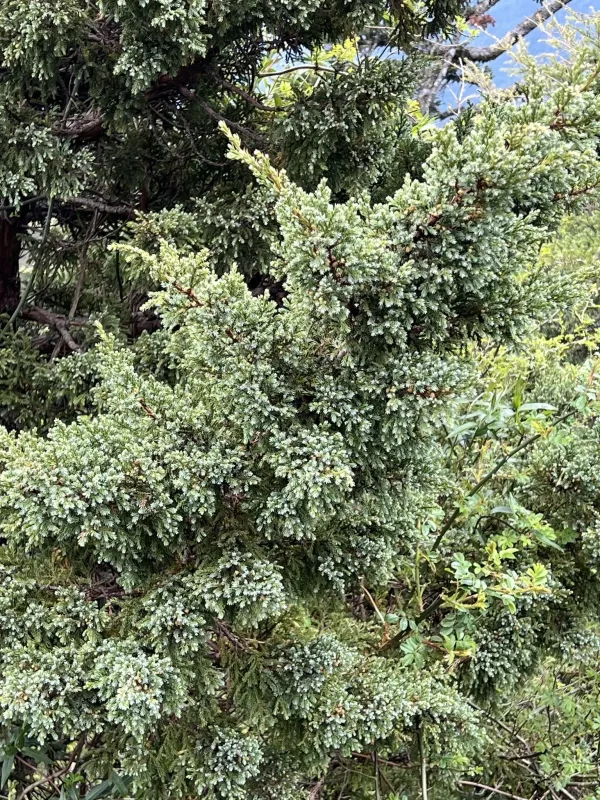
Description
Growing requirements
The flaky juniper (Juniperus squamata) is a distinctive member of the Cupressaceae family, native to the mountainous regions of the Himalayas and China. It is highly valued in horticulture for its dense, spreading, or prostrate growth habit.
Botanically, this shrub is characterized by its stiff, lanceolate needles that often feature a striking glaucous or blue-green tint. Unlike some other conifers, its growth rate is relatively slow, making it an excellent choice for controlled landscape environments.
Regarding cultivation, this species thrives in well-drained soils and requires full sun to maintain its vivid foliage coloration. It is notably sensitive to waterlogged conditions, which can lead to root rot; therefore, providing a porous soil medium is essential.
The plant demonstrates remarkable hardiness once established, adapting well to alpine-like conditions. However, young specimens benefit from shelter during the first winters to prevent drying out from winter winds and potential sunscald in early spring.
Economically and aesthetically, Juniperus squamata serves as a foundational plant for rock gardens and ground cover designs. Its ability to thrive on slopes makes it useful for erosion control in landscaped outdoor spaces.
Main diseases and pests
The most significant disease affecting the flaky juniper is rust (Gymnosporangium species), which manifests as gall-like growths on branches. Management involves pruning affected areas and applying copper-based fungicides during the growing season.
Phytophthora root rot poses a severe threat, especially in areas with poor soil drainage. Prevention focuses on site selection and ensuring that the irrigation frequency allows the root zone to dry sufficiently between watering cycles.
Insect pests, specifically scale insects and spider mites, frequently colonize the dense foliage. These pests can be identified by yellowing needles or fine webbing, necessitating the use of horticultural oils or specialized insecticides to manage infestations.
Juniper webworm larvae can also cause significant damage by feeding on the interior needles and webbing shoots together. Early detection is key; physical removal of the webbed nests is often the first line of defense before chemical treatments are considered.
Consistent monitoring and sanitation remain the cornerstone of pest management. Keeping the plant free from debris and ensuring proper spacing between individuals prevents the creation of microclimates that encourage the spread of fungal pathogens and pests.