
Creeping juniper
Juniperus horizontalis Moench
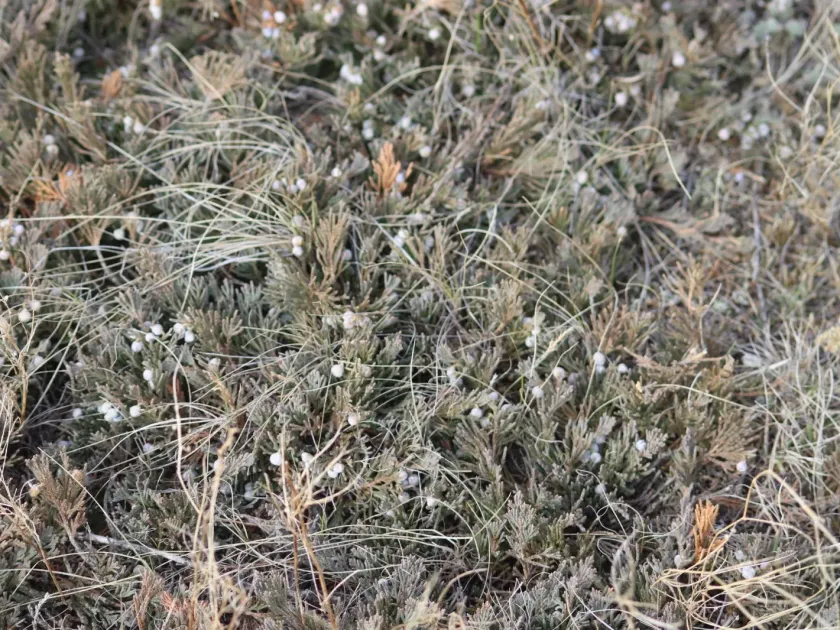
Description
Growing requirements
Creeping juniper (Juniperus horizontalis Moench) is a low-growing, prostrate shrub belonging to the Cupressaceae family. Native to North America, it thrives in a variety of environments, from rocky cliffs to sandy riverbanks.
The plant is highly valued for its hardiness and ability to tolerate diverse climate conditions. It is an ideal species for northern regions, as it withstands extremely low temperatures without the need for special winter protection.
Regarding soil requirements, creeping juniper prefers well-drained, sandy, or rocky soils. It is remarkably tolerant of poor nutrient conditions, which makes it a versatile choice for landscape stabilization in areas where other plants fail to thrive.
Agricultural management is relatively simple; however, adequate sunlight is essential. If planted in deep shade, the inner branches may die back, and the plant will lose its characteristic dense, carpet-like habit. Regular watering during the establishment phase is the only major intensive maintenance required.
In landscape architecture, the species is widely utilized for erosion control on slopes and as an ornamental groundcover. Its dense growth effectively suppresses weed competition, while its evergreen foliage provides year-round color in residential and public garden designs.
Main diseases and pests
Rust diseases are the primary fungal threat to this species. Infections typically appear as orange or brown galls on the branches, which can lead to significant dieback if not pruned away early in the infection cycle.
Phytophthora root rot is a major risk, often resulting from poor soil drainage or excessive irrigation. The symptoms include yellowing and browning of the foliage, followed by the rapid collapse of the plant due to root system dysfunction.
Juniper scale insects are common pests that attach themselves to the needles, sapping plant energy and causing localized yellowing or loss of vigor. Infested shrubs often appear dull and unhealthy compared to pest-free specimens.
Spider mites are particularly problematic during hot, dry summer months. They thrive in dusty conditions, causing a stippled appearance on the foliage and, if left untreated, significant webbing that indicates a heavy infestation.
Effective management strategies include maintaining proper spacing between plants to ensure good airflow and conducting periodic visual inspections. Applying horticultural oils and copper-based fungicides serves as a critical defense against both insect pests and fungal pathogens.