
Savin juniper
Juniperus sabina L.
Description
Growing requirements
Savin juniper (Juniperus sabina L.) is a perennial evergreen shrub belonging to the Cupressaceae family. It is native to the mountains of Central and Southern Europe, as well as parts of Asia and Siberia, where it naturally thrives in rocky terrains.
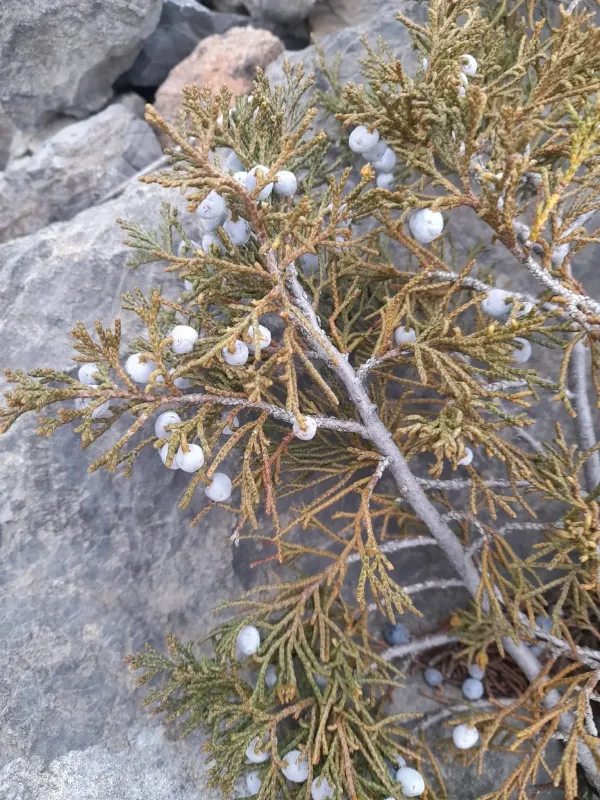
Botanically, this species is characterized by its prostrate, spreading growth habit. The needles are scale-like on adult branches and needle-like on young shoots, emitting a strong, distinct aroma when crushed due to the presence of specific volatile oils.
Regarding climate and site requirements, the Savin juniper is remarkably hardy. It is drought-tolerant and performs best in full sun. While it can survive in partial shade, optimal growth and density are only achieved with sufficient sunlight exposure.
The plant is highly adaptable to various soil types, including poor, sandy, and stony soils. However, the substrate must be well-drained. Waterlogged soil is detrimental, as it can easily lead to root rot and other fungal complications.
In landscape architecture, it is widely utilized for ground cover and soil stabilization on slopes. Because of its vigorous spreading nature, it is a popular choice for rock gardens and large-scale decorative plantings in urban areas.
Main diseases and pests
The primary pathological threat to the Savin juniper is juniper rust, a fungal disease that causes orange, gelatinous galls to form on branches. The fungus often completes its life cycle on pear or apple trees, making proximity to orchards undesirable.
Pests such as spider mites and scale insects are common. These organisms sap nutrients from the plant, causing discoloration of the needles and reducing the overall vigor of the shrub. Regular monitoring is necessary during hot, dry summer months.
Management practices include the immediate pruning and burning of affected branches. Fungicidal sprays applied during the early spring are effective in preventing the spread of fungal spores to healthy tissue.
It is important to emphasize that this plant contains the toxin sabinene. All maintenance activities, especially pruning, must be performed with protective gloves to prevent skin irritation and potential health risks.
Maintaining the health of the shrub relies on proper spacing to ensure adequate air circulation and avoiding overhead watering, which creates an environment conducive to fungal development.