
Pfitzer juniper
Juniperus x pfitzeriana (Späth) P. A. Schmidt
Description
Growing requirements
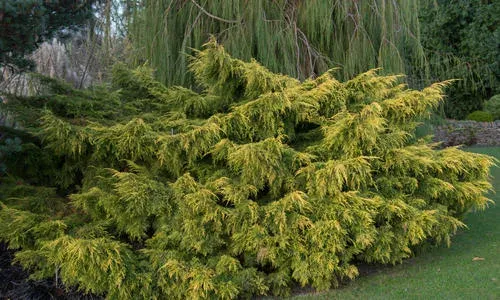
Pfitzer juniper (Juniperus x pfitzeriana) is a resilient hybrid shrub from the Cupressaceae family, created by crossing Juniperus sabina and Juniperus chinensis. It is highly valued for its expansive growth habit and adaptability to various garden environments.
This species thrives in full sun, which is essential for maintaining a dense foliage structure and vibrant color. While it can tolerate partial shade, insufficient light often results in thin, leggy growth patterns.
It prefers well-draining soils with a neutral or slightly acidic pH. The plant is remarkably drought-tolerant once established, but it requires regular moisture during the first few growing seasons after planting.
Basic maintenance involves light pruning to preserve the shape and size of the shrub. Using organic mulch around the base helps retain soil moisture and prevents competition from weeds in the root zone.
Due to its hardiness, the Pfitzer juniper is an excellent choice for erosion control on slopes, foundation plantings, and mass landscaping projects. Its versatile nature allows it to flourish in diverse climate conditions.
Main diseases and pests
Rust diseases, caused by Gymnosporangium fungi, are the most significant threats, typically appearing as orange galls on the branches. Application of copper-based fungicides is recommended for control.
Pests like spider mites and scale insects can cause significant damage to the needles during hot, dry weather. Regular monitoring and the use of horticultural oils or systemic insecticides help manage these populations.
Fusarium wilt is a serious fungal disease that can lead to sudden dieback of branches. Ensuring proper drainage and avoiding waterlogged soil are key preventive strategies for this condition.
Juniper needle cast is another common fungal issue resulting in discoloration and premature shedding. Clean sanitation practices, including removing infected plant material, are crucial for disease prevention.
Maintaining proper plant spacing encourages good air circulation, which is one of the most effective ways to mitigate the spread of fungal spores and reduce overall vulnerability to pests.