
Ping's Juniper
Juniperus pingii W. C. Cheng
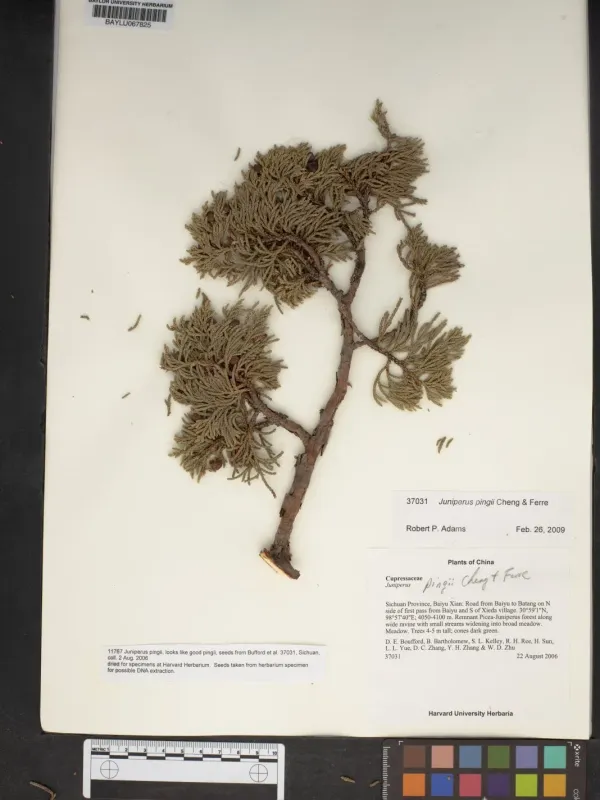
Description
Growing requirements
Ping's Juniper (Juniperus pingii) is a slow-growing, evergreen coniferous shrub belonging to the Cupressaceae family. This species is highly prized in horticulture for its dense, needle-like foliage and unique architectural shape that adds texture to any garden design.
Originating from the high-altitude mountainous regions of China, specifically within Sichuan and Yunnan provinces, this plant is naturally adapted to cool environments. It thrives in well-drained soils and demonstrates significant resilience against harsh environmental conditions.
Cultivation requirements include a preference for sunny sites, although it can tolerate light shade during the hottest parts of the day. The soil must be well-aerated with a neutral to slightly acidic pH, and avoiding heavy, clay-based substrates is crucial to prevent root rot.
The botanical structure consists of stiff, sharp needles that often display a glaucous or bluish-green hue. The growth habit can range from upright and columnar to spreading, depending on the specific cultivar and the environmental stressors present in the planting site.
Basic maintenance involves minimal watering once the plant is established, as the species is relatively drought-tolerant. Annual mulching around the base of the plant helps retain soil moisture, suppresses weed growth, and keeps the root zone cool during the summer season.
Main diseases and pests
Rust fungi represent one of the most significant threats to Ping's Juniper, particularly in regions where it is planted near apple or pear trees. Ensuring adequate spacing and airflow helps reduce the risk of spore transmission between host plants.
Root rot, often caused by Phytophthora species, remains a persistent danger in soils with poor drainage. Once established, this condition is difficult to treat, making prevention through proper soil preparation the most effective defense strategy.
Pests such as scale insects and spider mites may infest the foliage, particularly during hot and dry spells. These pests suck the sap from the needles, leading to chlorosis, stunted growth, and a loss of the plant's natural aesthetic appeal.
Winter desiccation is a common issue for young shrubs, where cold winds and bright sun cause the needles to lose more moisture than the roots can replace. Applying an anti-transpirant or protective burlap cover can mitigate this damage during the first winter.
Routine inspection for signs of discoloration or wilting is vital for early detection of issues. Pruning should be performed with sanitized tools to prevent the accidental spread of pathogens, focusing on removing dead or diseased wood to promote healthy growth.