
Rocky Mountain juniper
Juniperus scopulorum Sarg.
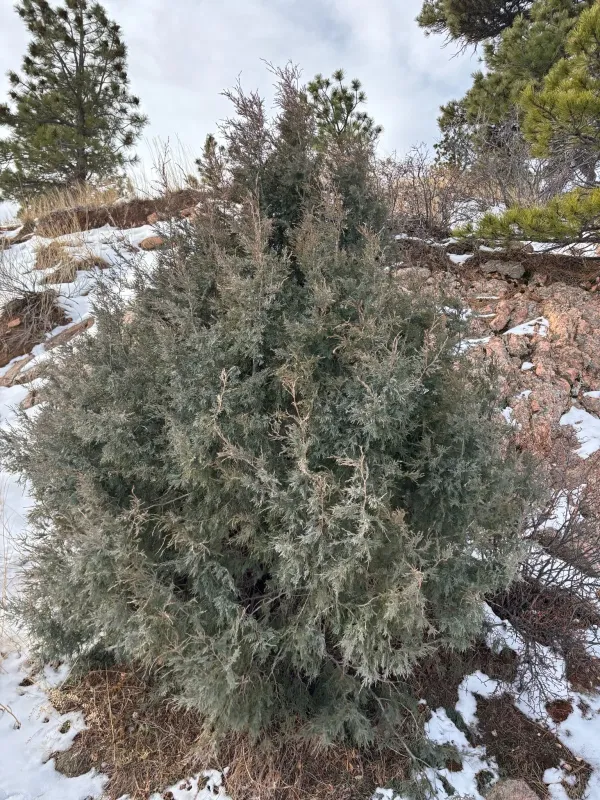
Description
Growing requirements
The Rocky Mountain juniper (Juniperus scopulorum Sarg.) is a member of the Cupressaceae family. It is a slow-growing evergreen conifer species native to the western regions of North America, where it typically thrives in rocky soils and mountainous environments.
This species is highly drought-tolerant and requires full sun exposure to thrive. When planted in shaded areas, the plant tends to lose its characteristic dense, columnar growth habit and may exhibit thinning foliage, which significantly reduces its ornamental value.
The plant is versatile regarding soil types, as it is adapted to dry, infertile, and rocky substrates. However, it requires well-drained soil; waterlogged conditions are fatal to the root system, often leading to rapid decline and mortality due to root rot.
In terms of climate, the Rocky Mountain juniper is cold-hardy and can withstand harsh winter conditions and high-altitude temperatures. It is an excellent choice for xeriscaping, as it requires minimal supplemental water once established.
Cultural practices involve minimal intervention. Pruning is rarely necessary but can be done to maintain a desired shape. Mulching around the base helps stabilize soil temperature and suppresses weed growth without competing for nutrients.
Main diseases and pests
Cedar-apple rust is the most destructive fungal pathogen affecting this species. It appears as orange, gelatinous galls on branches during moist spring weather, leading to needle drop and severe branch dieback over several growing seasons.
Phytophthora root rot poses a significant threat in areas with poor drainage or excessive irrigation. This soil-borne pathogen attacks the root system, causing the plant to turn brown and eventually die from the base upwards.
Spider mites are a common insect pest, particularly in hot and dry weather. They feed on the sap of the foliage, causing a bronzed or stippled appearance. Heavy infestations can lead to significant needle loss and plant stress.
Juniper scale and aphids can also impact plant vigor by colonizing stems and foliage. These insects produce honeydew, which can attract sooty mold, further degrading the health and appearance of the specimen.
- Apply fungicides during peak moisture periods.
- Ensure deep, infrequent watering cycles.
- Use systemic insecticides for mite control.