
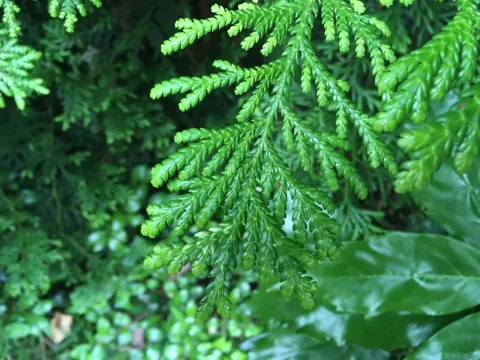
Hiba
Thujopsis Siebold & Zucc. ex Endl.
Hiba, or Thujopsis dolabrata, is an ornamental conifer belonging to the Cupressaceae family. It is native to the temperate rainforests of Japan, known for its unique, broad, fan-like leaves that set it apart from other conifers.
What the section contains

Hiba
The tree thrives in cool, humid climates and prefers partially shaded locations. Intense exposure to direct sunlight can lead to scorched foliage, therefore shelter from the midday sun is essential for optimal growth.
Regarding soil conditions, Hiba requires rich, well-draining, and moisture-retentive substrates. The ideal pH range is slightly acidic, and it is crucial to ensure that the site does not experience waterlogging, as the roots are sensitive to stagnation.
Agrotechnical care involves regular mulching to keep the roots cool and moist. In colder regions, young plants require protection during winter to prevent frost damage to the terminal buds and foliage.
The primary use of this species is in horticulture and landscape architecture. Its slow-growing nature and distinct texture make it an excellent choice for specimen planting, traditional Japanese-style gardens, and hedge boundaries.
Hiba is generally robust but can fall victim to fungal diseases if environmental conditions are suboptimal. Root rot is a significant risk, typically associated with poor soil drainage and excessive soil moisture.
Fungal leaf blight may occur if the plant is grown in areas with poor airflow. Maintaining proper spacing between trees and performing regular crown thinning can significantly reduce the risk of humidity-related infections.
Common pests that can affect Hiba include scale insects and mealybugs. These pests reside on the stems and foliage, extracting sap and potentially weakening the overall structure of the tree if left untreated.
Spider mites can become a nuisance during hot and dry spells, particularly in container-grown plants. Frequent misting and maintaining adequate humidity levels are effective preventive measures against these infestations.
Effective pest management relies on early detection and physical removal or appropriate insecticide application. Monitoring the health of the foliage throughout the year is key to maintaining the aesthetic and biological integrity of the plant.