
Prickly juniper
Juniperus oxycedrus L.
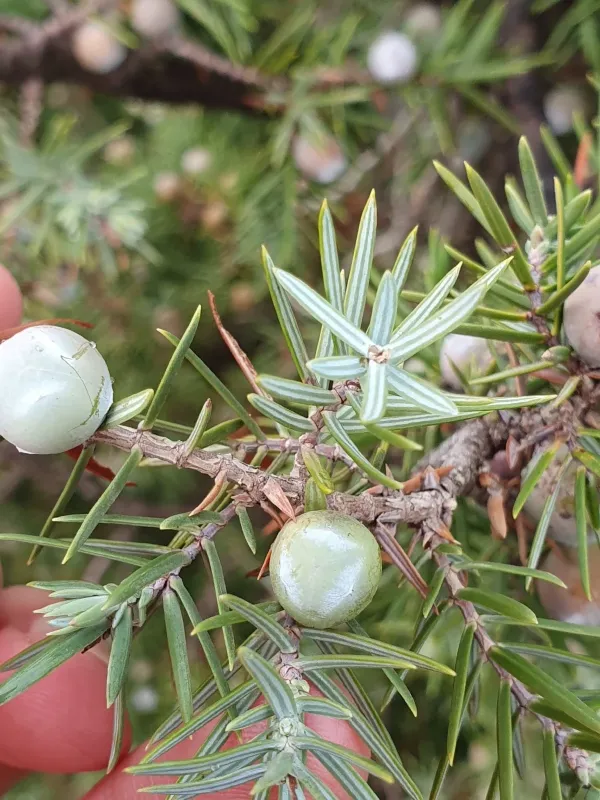
Description
Growing requirements
Prickly juniper (Juniperus oxycedrus L.) is a member of the Cupressaceae family. It is an evergreen coniferous shrub or small tree that is native to the Mediterranean region, Southern Europe, and North Africa.
This species is well-known for its exceptional drought tolerance and ability to thrive in poor, rocky soils. It is a highly light-demanding culture, requiring full sun exposure to maintain its vigor and health throughout its life cycle.
Botanically, it is distinguished by its stiff, prickly needles featuring two distinct white stomatal bands on the upper surface. The fruit, or cones, ripen into a characteristic reddish-brown or orange-brown color.
In terms of cultivation, the plant requires excellent drainage as it cannot tolerate waterlogged soils. It is remarkably adaptable to various soil pH levels, including calcareous substrates, making it an ideal candidate for restoring degraded landscapes.
The climate requirements for prickly juniper are typical of the Mediterranean climate, characterized by hot, dry summers and mild winters. It is highly resilient and can withstand prolonged heat stress better than many other juniper species.
Main diseases and pests
The main phytosanitary threats to prickly juniper include fungal diseases such as juniper rust, which is caused by fungi of the Gymnosporangium genus. Symptoms include gall formations and orange spore masses on branches.
Key insect pests include the juniper scale and the red spider mite. The spider mite is particularly problematic in hot and dry weather conditions, causing the foliage to turn yellow and eventually drop prematurely.
Proper maintenance, such as avoiding overhead irrigation, is essential to minimize fungal growth. If a significant outbreak occurs, application of appropriate fungicides or insecticides specifically formulated for conifers is recommended.
Regular monitoring of the crown structure is vital for early pest detection. Keeping the planting site clean and removing debris around the root zone helps in reducing the population of overwintering pathogens.
It is important to manage the density of plantings. Providing sufficient air circulation between plants helps dry out the foliage after rainfall, significantly reducing the incidence of fungal infections.
Harvesting
The economic utility of prickly juniper is largely centered around the harvesting of its berries. These are processed to extract essential oils and wood tar, which have wide applications in pharmacy and cosmetics.
The wood of this species is highly valued for its durability and natural resistance to decay and insects. It is traditionally used in woodwork, small crafts, and furniture making, often noted for its pleasant, aromatic scent.
Harvesting should be conducted when the cones are fully mature. Operators must exercise caution and wear protective gear, as the sharp, needle-like leaves of the plant can cause severe skin irritation during the collection process.
The production of juniper tar, obtained through the dry distillation of wood, is a traditional and highly valued industry. This product is prized for its strong antiseptic and anti-inflammatory properties.
Beyond its industrial uses, prickly juniper plays a critical role in environmental management, particularly in arid regions. Its deep root system makes it an excellent choice for stabilizing slopes and preventing soil erosion.