
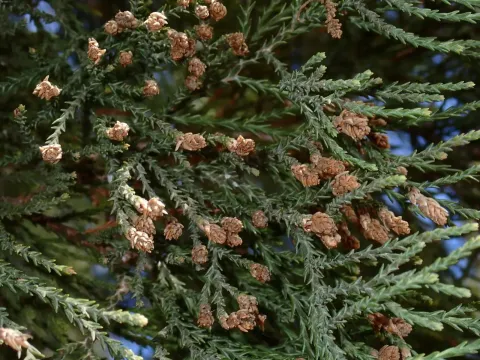
Giant sequoia
Sequoiadendron
The Giant Sequoia (Sequoiadendron giganteum) is a member of the Cupressaceae family. Propagation is primarily done through seeds, which require a cold stratification period of 1 to 3 months to break dormancy and ensure high germination rates.
What the section contains

Giant sequoia
Seeds should be sown in a well-draining, sterile potting medium. The ideal germination temperature is around 20°C (68°F), with the soil kept consistently moist but not waterlogged to prevent fungal issues.
Young seedlings are fragile and grow relatively slowly in their first few years. They require filtered sunlight and protection from extreme weather conditions, such as frost and scorching afternoon heat.
Transplanting seedlings into larger containers or nursery beds should be done carefully to avoid damaging the delicate, fibrous root system. Maintaining stable humidity levels during the nursery stage is crucial for survival.
While vegetative propagation through cuttings is technically possible, it is notoriously difficult and rarely used commercially. Therefore, seed-based nursery production remains the standard for cultivation.
Giant Sequoias thrive in deep, fertile, and well-drained soils. They prefer loamy or sandy loam textures with a slightly acidic to neutral pH, which allows for optimal nutrient uptake and root development.
The tree requires significant moisture throughout the growing season. While it is native to regions with seasonal fog, in cultivation, it needs consistent irrigation to maintain health, especially during dry spells.
Climatically, it prefers temperate environments with mild winters and cool summers. Although established trees are cold-hardy, younger saplings are sensitive and need protection during deep freezes.
Full sun is essential for the tree's development. Planting in shaded areas leads to sparse, unbalanced crown growth and increases susceptibility to fungal diseases due to poor air circulation.
Sufficient space is required for long-term growth. Because these trees can reach massive proportions, they must be planted away from buildings and structures that could be damaged by their shallow but wide root systems.
In silviculture, the Giant Sequoia is managed for its immense potential wood volume. However, its extremely slow maturity cycle makes it unsuitable for short-term commercial timber production.
The wood is highly valued for its natural resistance to decay and insects, making it an excellent material for historical construction and specialized woodworking projects, though harvesting is strictly regulated.
For commercial nurseries, the "yield" refers to the production of healthy, high-quality saplings for the landscaping and reforestation markets. Success depends on maintaining low mortality rates during the first five years.
These trees are increasingly utilized in carbon sequestration projects due to their massive biomass potential. Large-scale plantings are sometimes used to mitigate climate change impacts in managed forests.
Ornamental value represents a significant economic output. Mature specimens in botanical gardens or private estates provide significant ecological and aesthetic services, adding value to the property over decades.
Root rot, often caused by Phytophthora species, is the primary threat to health, especially in poorly drained or waterlogged soils. Once root decay starts, it is extremely difficult to reverse.
Pests such as bark beetles, spider mites, and aphids can infest stressed trees. Bark beetles are particularly dangerous, as they can cause rapid decline and eventual death of the entire tree.
Fungal pathogens causing heart rot can enter the trunk through wounds or broken branches. These infections compromise structural integrity, making the tree prone to storm damage.
Environmental stresses, such as prolonged drought and heatwaves, reduce the tree's natural defense mechanisms, making it more susceptible to secondary infestations and diseases.
Small mammals and rodents can cause significant damage by girdling the bark of young trees. Protective measures, including wire mesh guards, are essential during the initial years of establishment.