
Marantochloa mannii
Marantochloa mannii
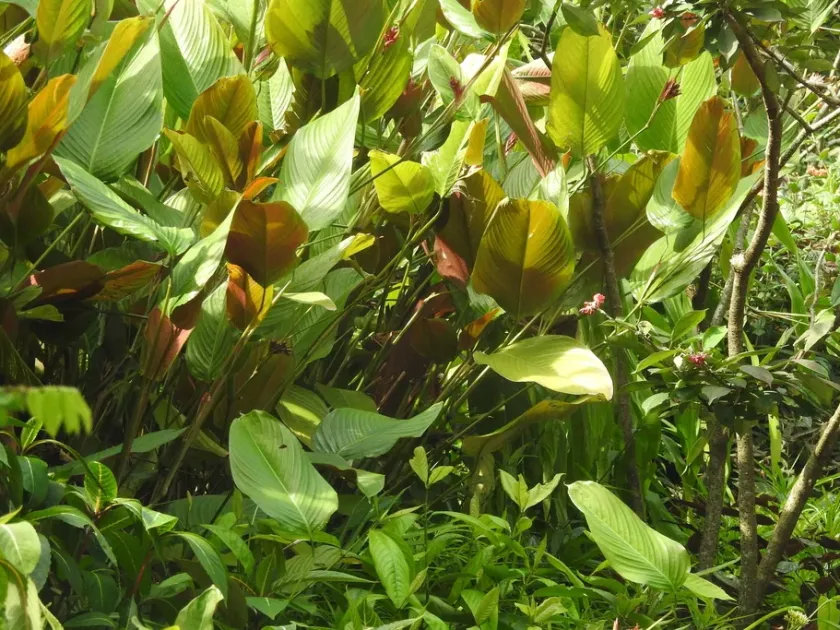
Description
Growing requirements
Marantochloa mannii is a perennial herbaceous plant belonging to the Marantaceae family. Native to the tropical rainforests of West and Central Africa, it typically thrives in the forest understory where humidity levels are consistently high and light intensity is moderate.
Botanically, the plant is characterized by long petioles and large, flexible leaves. These leaves are a defining feature of the species, exhibiting a high degree of durability and resistance to tearing, which makes them highly valued for various practical applications.
The plant requires fertile, well-draining soils rich in organic matter to support its vigorous growth. It is highly sensitive to water stress and thrives best in areas with an annual rainfall pattern that ensures consistent soil moisture levels throughout the year.
Regarding climate, Marantochloa mannii is strictly tropical. It prefers temperatures between 22 and 28 degrees Celsius and requires protection from direct sunlight and strong, desiccating winds that could damage its leaf surfaces.
Economically, the plant is significant for its leaves, which are widely used by local communities as a natural, biodegradable packaging material. These leaves are particularly favored for wrapping foods that are steamed or boiled, as they do not impart flavor and withstand high heat.
Harvesting
Harvesting of Marantochloa mannii leaves is a continuous process performed manually. Farmers select only mature, healthy leaves, ensuring that the central growing point of the plant remains undamaged for future production.
Post-harvest handling involves cleaning and sorting the leaves by size and condition. Because the leaves are perishable, they must be transported and utilized quickly or kept in a humid environment to maintain their flexibility and strength.
Standardized harvesting techniques are essential to maintain the productivity of the stands. Over-harvesting can weaken the rhizomes, so periodic rest periods for the plants are recommended in managed agroforestry systems.
The market for these leaves remains strong due to their versatility and environmental friendliness compared to plastic alternatives. Small-scale farmers often harvest them as a supplementary income source alongside other food crops.
In addition to packaging, research into the fibers of the plant suggests potential for secondary uses in artisanal crafts, such as weaving small containers or bindings, further increasing the agricultural value of this species.