
Maranta leuconeura
Maranta leuconeura E. Morren
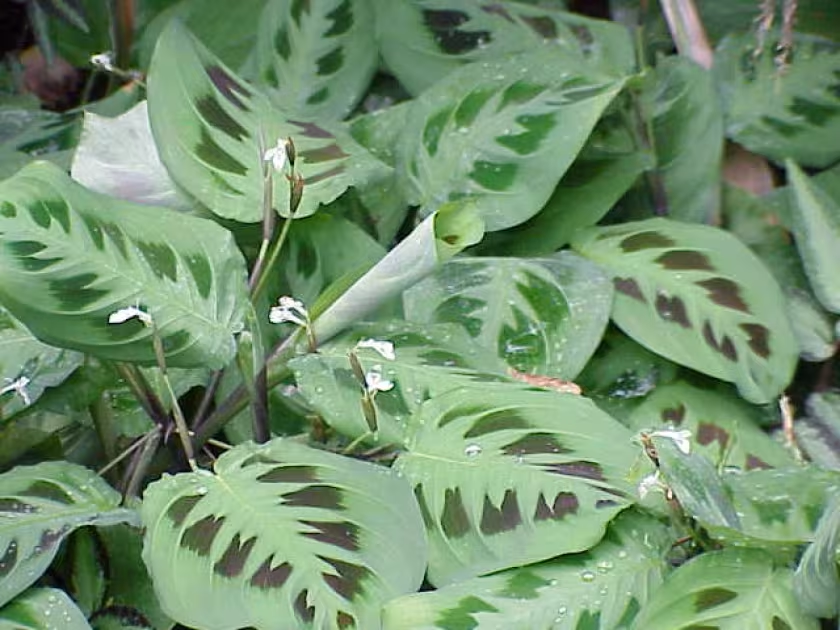
Description
Growing requirements
Maranta leuconeura, commonly known as the prayer plant, belongs to the Marantaceae family and is native to the tropical rainforests of Brazil. This herbaceous perennial is highly valued for its striking foliage, which exhibits distinct movement, folding up at night like hands in prayer.
The plant thrives in warm, stable temperatures ranging between 20°C and 25°C (68°F–77°F). It is highly sensitive to temperature fluctuations and cold drafts, which can cause significant physiological stress, leading to slow growth or the development of brown leaf margins.
A loose, well-draining, and slightly acidic potting mix is essential for the healthy development of its root system. A blend of peat, perlite, and coarse bark is commonly used in commercial cultivation to ensure sufficient aeration and to prevent the substrate from becoming overly compacted.
Light requirements for this species are specific: it demands bright, indirect light. Direct exposure to the sun will bleach the intricate variegation of the leaves and may even cause permanent burn spots, whereas insufficient light will result in smaller leaf size and loss of growth vigor.
High humidity levels are paramount, ideally between 60% and 80%. In cultivation, this is managed by using automatic misting systems, humidifiers, or pebble trays. Water quality is also critical, as the plant is sensitive to the fluoride and chlorine content often found in tap water.
Main diseases and pests
Spider mites represent the primary pest threat to Maranta leuconeura, particularly in indoor environments with low humidity. They congregate on the undersides of leaves, causing yellowing and fine webbing, which significantly reduces the photosynthetic efficiency of the plant.
Mealybugs and scale insects may also infest the plant, extracting sap and weakening the overall structure. Control measures include manual removal followed by the application of horticultural soaps or systemic insecticides to eliminate immature stages of the pests hidden in leaf axils.
Root rot is the most common disease associated with overwatering or poor drainage. Symptoms include wilting despite moist soil, soft stems, and blackened roots, which require immediate repotting in sterile, fresh substrate and trimming of the affected root mass to save the plant.
Leaf spot diseases, often caused by fungi such as Helminthosporium or Colletotrichum, manifest as dark, sunken lesions on the foliage. These occur primarily when moisture lingers on leaf surfaces for extended periods, especially in environments with poor air circulation.
Physiological disorders, such as tip burn, are frequently caused by mineral salt accumulation from improper fertilization or the use of hard water. Periodic flushing of the potting medium with distilled or rainwater can help mitigate salt buildup and improve the plant's long-term health.