
Soehrensia formosa
Soehrensia formosa
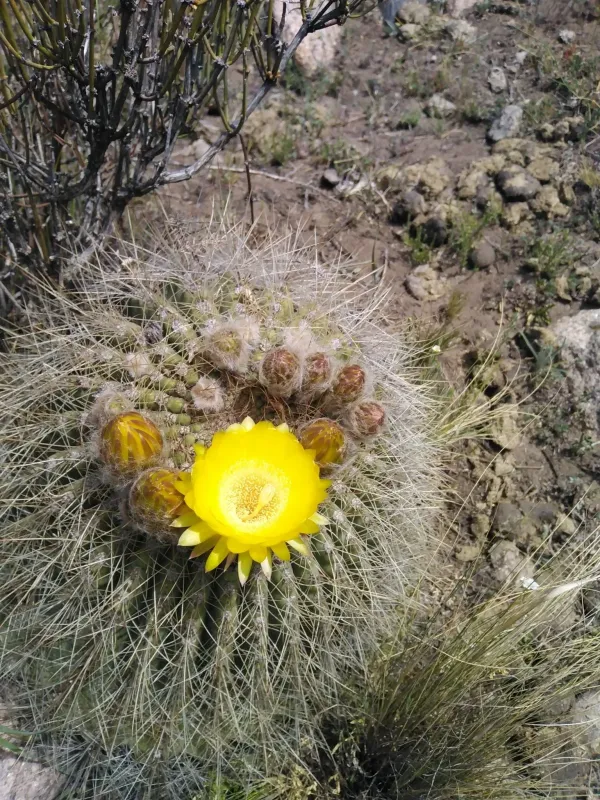
Description
Growing requirements
Soehrensia formosa is a distinguished member of the Cactaceae family, native to the high-altitude regions of the Andes mountains. This perennial succulent has evolved to thrive in harsh, rocky environments, developing significant resilience to extreme temperature fluctuations and intense solar radiation.
Botanically, the plant features a robust, globular or columnar stem that serves as a reservoir for moisture. The surface is armored with dense, rigid spines which not only protect the plant from herbivores but also provide shading to the stem's surface to reduce excessive water loss through transpiration.
Cultivation requires a highly specific approach to mimic its native habitat. A mineral-based, gritty, and fast-draining substrate is mandatory, as the plant cannot tolerate waterlogged conditions which rapidly lead to root decay.
Temperature management is critical: while the plant appreciates bright, direct sunlight during the growing season, it requires a distinct period of winter dormancy. During this cold, dry interval, the plant must be kept cool to prepare it for the following growth cycle and potential flowering.
The primary use of Soehrensia formosa is within the ornamental horticultural sector, where it is highly prized by collectors for its architectural beauty and impressive, large blossoms. Its slow growth rate makes it a long-term investment for specialized nurseries and private gardens.
Main diseases and pests
The most significant threat to Soehrensia formosa is fungal infection, particularly root and stem rot caused by improper irrigation practices and poor drainage.
Common pests include the red spider mite, which can severely damage the skin of the plant, and mealybugs, which tend to hide in the crevices between the ribs and spines.
Pest management relies on integrated strategies, including physical removal and the application of suitable acaricides or systemic insecticides when infestation levels warrant.
Maintaining a clean, well-ventilated environment is the most effective preventive measure against both fungal spores and common succulent pests.
Regular inspection of the plant base is necessary, as early detection of necrosis or softening tissues can be the difference between successfully treating the plant and losing it entirely.