
Selenicereus ocamponis
Selenicereus ocamponis
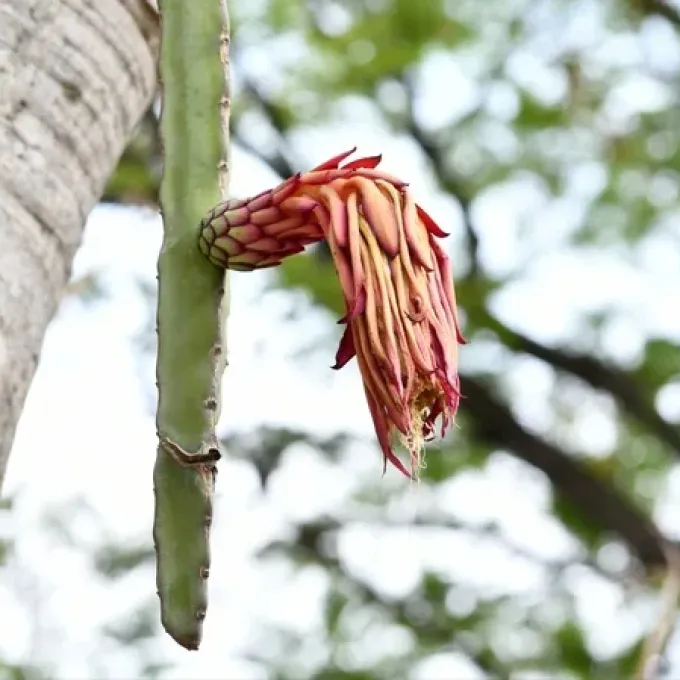
Description
Sowing dates
Propagation of this culture is primarily achieved through stem cuttings. The optimal time for rooting is during the active growing season, specifically from late spring to early summer.
Before planting, cuttings must be dried for several days until a callus forms at the cut site. This process is crucial to prevent rot when the cutting is placed into a moist growing medium.
A light, well-draining substrate rich in sand or perlite is recommended. Planting should be done in containers with sufficient drainage holes to prevent water accumulation at the base.
Young plants require consistent temperatures and careful watering until they are fully established. Avoiding drastic fluctuations in moisture levels is vital for successful rooting.
Seed propagation is less common and is typically reserved for breeding or research purposes. Seeds are sown in a warm, moist substrate under controlled light and humidity conditions.
Growing requirements
Selenicereus ocamponis belongs to the Cactaceae family and is an epiphytic vining cactus. Originating from the tropical regions of Mexico, it thrives in environments with filtered light and high atmospheric humidity.
The culture requires a stable temperature range, ideally between 20 and 28 degrees Celsius. The plant is highly sensitive to cold and should be kept away from drafts and temperatures dropping below 10 degrees Celsius.
The soil must be loose, porous, and have a neutral or slightly acidic pH. Effective drainage is essential, as stagnant water in the root zone is the primary cause of decline for this species.
Exposure to bright, filtered light is optimal. Direct sunlight during peak hours can cause sunburn on the stems, so shading is often necessary during the hottest part of the day.
Humidity levels should ideally be maintained between 60 and 70 percent. Occasional misting helps replicate the natural tropical environment and maintains the turgidity of the stems.
Main diseases and pests
The most common pests affecting this plant are mealybugs and spider mites, which often proliferate in low-humidity conditions. Frequent inspections of stem crevices are recommended for early detection.
Root and stem rots represent the most serious threat to the health of the plant. These diseases are usually triggered by excessive irrigation or low ambient temperatures, causing rapid tissue decay.
Prevention involves ensuring that water does not accumulate at the base of the plant and maintaining good airflow around the stems. Proper sanitation of tools is also a critical practice.
If an infestation or infection occurs, systematic insecticides or fungicides should be applied. Infected areas must be carefully excised to healthy tissue, followed by treatment with a suitable fungicide.
The use of a high-quality, lightweight substrate without clay components is the best preventative measure against most soil-borne pathogens and fungal diseases in greenhouse cultivation.