
Soehrensia schickendantzii
Soehrensia schickendantzii
Description
Growing requirements
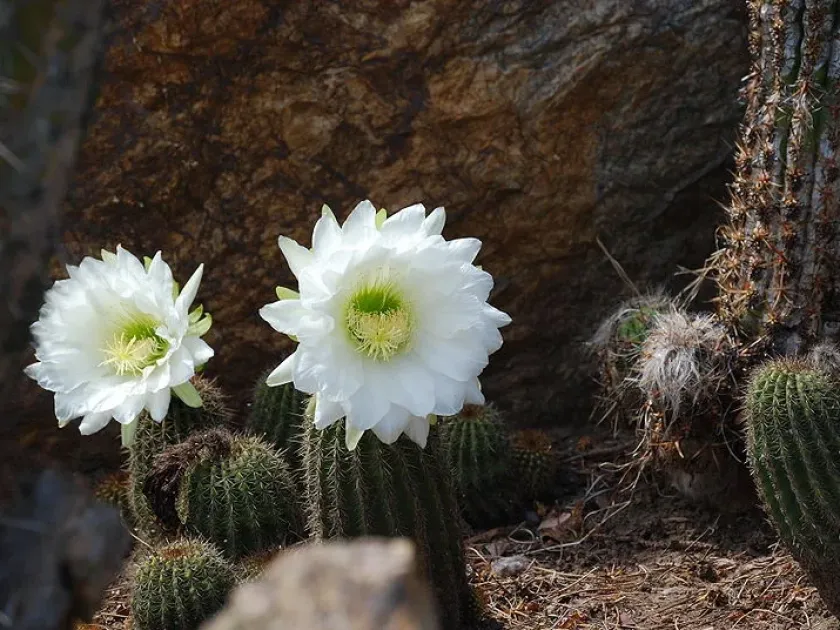
Soehrensia schickendantzii is a perennial succulent belonging to the Cactaceae family. Originating from the arid zones of Argentina, this species is highly adapted to intense solar radiation and minimal water availability.
The plant requires full sun exposure to maintain its structural integrity and encourage flowering. In cultivation, it thrives best in a greenhouse environment where temperatures can be strictly controlled to mimic its native habitat.
Soil requirements are strict regarding drainage. A standard mix should consist of coarse sand, pumice, and loam. Providing a porous medium ensures that water drains rapidly, preventing root asphyxiation and subsequent rot.
During the growing season, the plant benefits from regular but careful irrigation. The substrate should be allowed to dry out completely between waterings to simulate the erratic rainfall patterns of the Argentine highlands.
Winter dormancy is critical for the health of Soehrensia schickendantzii. The temperature should be lowered to around 10–12 degrees Celsius, and water should be withheld entirely to trigger the plant's metabolic slowing.
Main diseases and pests
Root rot, induced by fungal pathogens such as Pythium and Phytophthora, remains the primary threat. It is usually a direct consequence of over-watering or poor aeration in the soil composition.
Spider mites are prevalent in environments with low humidity. These pests puncture the cactus skin, causing visible scarring and promoting the entry of secondary viral or bacterial infections.
Mealybugs tend to congregate in the areoles of the cactus, where they are protected by woolly deposits. Control requires persistent application of systemic insecticides or manual removal with isopropyl alcohol.
Scale insects can attach themselves to the surface of the stem, sapping nutrients and causing localized tissue necrosis. Regular inspection and localized cleaning are essential for large collections.
Poor lighting leads to etiolation, a condition where the cactus becomes weak, pale, and elongated. While not a disease in the biological sense, it makes the plant significantly more vulnerable to physical damage and pests.