
Rebutia
Rebutia
Rebutia is a genus of small-sized cacti belonging to the Cactaceae family, native to the mountainous regions of Argentina, Bolivia, and Peru. These plants are well-adapted to high-altitude environments, thriving in rocky, well-drained slopes.
What the section contains
 Rebutia arenacea
Rebutia arenacea
Rebutia arenacea
 Rebutia cintia
Rebutia cintia
Rebutia cintia
 Rebutia fabrisii
Rebutia fabrisii
Rebutia fabrisii
 Rebutia heliosa
Rebutia heliosa
Rebutia heliosa
 Rebutia kupperiana
Rebutia kupperiana
Rebutia kupperiana
 Rebutia marsoneri
Rebutia marsoneri
Rebutia marsoneri
 Rebutia minuscula
Rebutia narvaecensis
Rebutia narvaecensis
Rebutia minuscula
Rebutia minuscula
Rebutia narvaecensis
Rebutia narvaecensis
 Rebutia steinbachii
Rebutia steinbachii
Rebutia steinbachii
Rebutia
They require bright, filtered light to maintain their compact shape and encourage blooming. During the growing season, they prefer moderate temperatures between 20°C and 25°C, while needing a clear temperature drop during winter for dormancy.
A fast-draining substrate is essential for the health of Rebutia. A mix consisting of standard cactus potting soil combined with pumice, coarse sand, or perlite ensures proper aeration and prevents the roots from sitting in stagnant moisture.
Watering should be conducted carefully: soak the soil thoroughly and then allow it to dry out completely before the next irrigation. In the winter months, these cacti should be kept almost dry to prevent rotting and to trigger the flowering process.
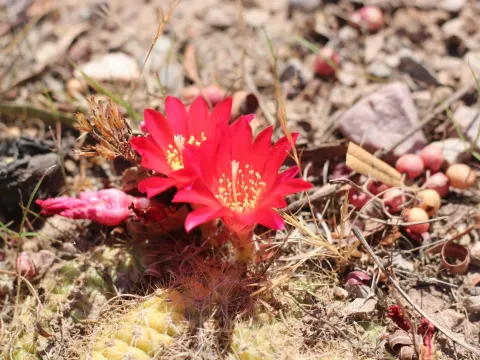
The morphological beauty of Rebutia lies in its globose, rib-covered stems and its profuse flowering habit. The flowers typically emerge from the lower parts of the stem and are often larger than the plant itself, creating a striking aesthetic.
The primary threat to Rebutia is root rot, which is almost exclusively caused by overwatering or poor drainage. Ensuring the substrate is free-draining and the pots have adequate drainage holes is the best preventive measure.
Common pests include spider mites, which thrive in hot and dry conditions, and mealybugs that can hide in the crevices between the tubercles. Regular inspections and the application of appropriate pesticides are recommended if infestation occurs.