
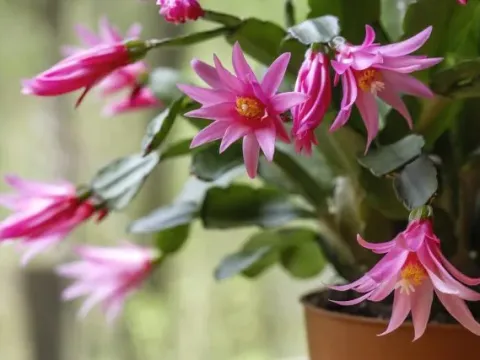
Rhipsalidopsis
Rhipsalidopsis Britton & Rose
Rhipsalidopsis, commonly known as the Easter Cactus, is an epiphytic species belonging to the Cactaceae family. Native to the humid rainforests of Brazil, this plant has adapted to growing in the canopy of trees, which dictates its specific requirements for light and soil composition in cultivation.
What the section contains


Rhipsalidopsis
In a controlled environment, Rhipsalidopsis thrives in bright, filtered light. Exposure to intense midday sun is detrimental to its flattened, leaf-like stem segments, leading to physiological damage and discoloration. Consistent humidity levels are crucial to replicate its natural tropical habitat.
The growing medium must be highly porous and well-draining, typically consisting of peat-based mixes combined with perlite or pumice. This structure allows for oxygen circulation around the root system, which is essential to prevent root asphyxiation in this sensitive epiphytic plant.
The plant requires a temperature drop during its winter dormancy period to initiate the formation of floral buds. Keeping the plant at temperatures between 12°C and 15°C for several weeks ensures a profuse bloom when temperatures increase in the spring.
Management practices involve careful monitoring of water levels. While the substrate should be kept moist during the active growth phase, excessive water accumulation can lead to rapid pathogen buildup, making efficient drainage an absolute necessity in commercial and home settings.
The primary threats to Rhipsalidopsis are fungal pathogens, specifically Phytophthora and Fusarium, which target the root system and stem segments when environmental conditions become excessively damp.
Insect pests such as mealybugs and spider mites represent significant risks to plant health. Mealybugs often hide in the crevices between stem segments, making them difficult to detect until an infestation becomes severe.
Spider mites thrive in environments where air humidity is chronically low, which is a common issue in indoor settings, necessitating the use of misting or ambient humidity control.
Effective pest management involves integrated control strategies, prioritizing early detection and the use of targeted biological or chemical treatments to maintain plant vigor.
- Regular inspection of stem joints for signs of pests.
- Application of systemic insecticides for severe pest infestations.
- Routine fungicide treatments for plants exhibiting signs of stem decay.