
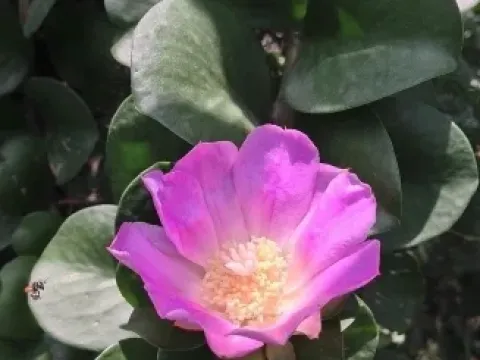
Rhodocactus
Rhodocactus
Rhodocactus is a genus of tree-like cacti belonging to the Cactaceae family. Unlike most of their prickly relatives, these plants possess well-developed, true leaves, which makes them resemble typical leafy shrubs or trees.
What the section contains


Rhodocactus
The natural range of this genus covers tropical regions of South America, particularly Brazil and Peru. In the wild, these plants prefer humid forests and foothills, where they are provided with sufficient diffused light and a consistently warm climate.
For successful cultivation, Rhodocactus requires well-drained, fertile, and loose substrates with a neutral or slightly acidic pH. The plant is extremely sensitive to water stagnation at the roots, so adding perlite or coarse sand to the soil mix is highly recommended.
The temperature regime should be stable, without sharp fluctuations. The optimal range for active growth is between 20 and 28 degrees Celsius. In winter, the plant requires a dormant period with a drop in temperature, but not below 12 degrees Celsius.
Lighting plays a key role: direct sunlight can cause burns on the delicate leaves, so the ideal placement is in partial shade or bright but diffused light throughout the day.
The most common problem when keeping Rhodocactus is root rot caused by excessive watering and poor drainage. At the first signs of wilting or darkening of the stem, it is necessary to reduce irrigation and apply fungicides.
Among pests, spider mites pose the greatest danger, as they actively multiply in conditions of low air humidity. Regular misting of the canopy helps prevent the establishment of mite colonies.
Mealybugs often infest leaf axils and young shoots, sucking sap from the plant. The detection of a white cotton-like substance requires immediate isolation of the plant and treatment with systemic insecticides.
Scale insects can also settle on the firm stems of Rhodocactus, hindering its development. Mechanical cleaning of the stems with an alcohol solution followed by the use of specialized products allows for neutralizing the threat.
Fungal infections, manifesting as spots on the leaves, occur due to stagnant air in greenhouses or rooms. Regular ventilation and maintaining the cleanliness of the substrate significantly reduce the risks of pathogen spread.