
Schlumbergera
Schlumbergera Lem.
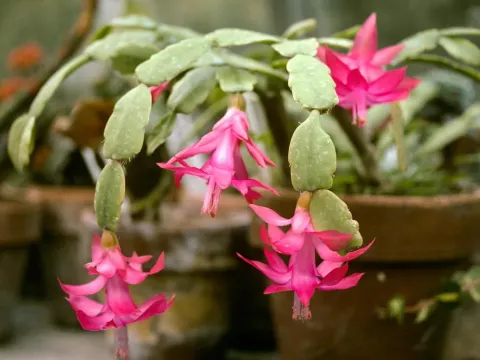
Schlumbergera (Schlumbergera Lem.) is a popular horticultural crop belonging to the Cactaceae family. Native to the coastal mountains of south-eastern Brazil, it grows as an epiphyte on trees, thriving in humid, tropical forest environments.
What the section contains


Schlumbergera
For successful cultivation, the plant requires bright, filtered light. Direct sun exposure must be avoided to prevent tissue dehydration and chlorosis. Temperature management is crucial, especially during the bud induction phase in autumn.
The soil substrate must be highly porous and well-draining, mimicking the forest litter where the plant naturally occurs. A peat-based mix supplemented with perlite or pine bark is recommended for optimal root aeration.
Watering practices should balance moisture retention with sufficient drainage to prevent root hypoxia. During the flowering stage, the plant requires consistent moisture, but water logging must be strictly avoided.
Botanically, Schlumbergera is distinguished by its flattened, photosynthetic stem segments. Its growth habit is typically trailing, making it highly suitable for hanging baskets in indoor and greenhouse horticulture.
Schlumbergera is susceptible to several fungal diseases, most notably Fusarium, Alternaria, and Anthracnose, which often arise due to poor ventilation and excessive moisture in the growing medium.
Rhizoctonia and Helminthosporium are particularly destructive pathogens that target the stem base, leading to rapid tissue necrosis and plant collapse. Cercospora leaf spot can also affect the segments during high-humidity periods.
Viral pathogens, including the Tomato mosaic virus, can cause stunted growth and chlorotic patterns on the stems. There is no cure for such viral infections, necessitating strict hygiene and isolation protocols.
Root-knot nematodes (Gall nematode) present a significant challenge by attacking the root system, causing nutrient uptake deficiency. Pests like mealybugs and scale insects also frequently colonize the joints of the segments.
- Implement strict sanitation measures for all gardening tools.
- Ensure adequate spacing between plants to improve airflow.
- Monitor for early signs of fungal growth on the stem base.
- Use systemic fungicides only when specific symptoms are confirmed.