
Santa Rita Prickly Pear
Opuntia santarita
Description
Growing requirements
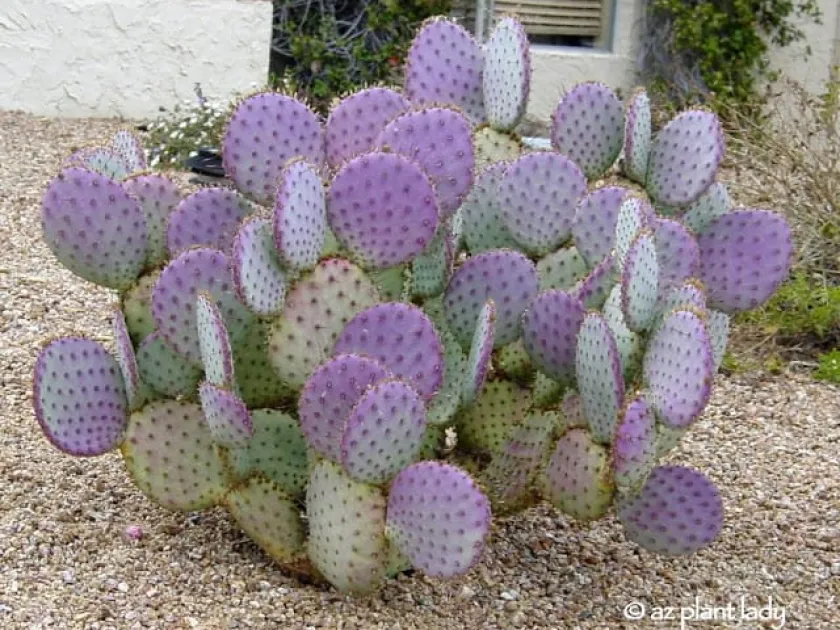
Santa Rita Prickly Pear (Opuntia santarita) belongs to the Cactaceae family. This succulent is highly regarded for its distinctive purple-hued pads, which develop their most intense pigmentation under environmental stress, such as cold or drought.
Native to the southwestern United States and northern Mexico, this species is exceptionally well-adapted to arid desert climates. It thrives in regions with intense solar radiation and minimal rainfall, demonstrating superior drought tolerance compared to many other cactus species.
The crop requires sandy, well-draining soils with excellent aeration to prevent root rot. In agronomic practices, ensuring a pH range of 6.0 to 7.5 is ideal for nutrient uptake, provided the substrate remains lean and inorganic.
Climate requirements include high daytime temperatures during the active growth phase and a distinct cooling period during dormancy. It can tolerate light frosts, but prolonged freezing temperatures coupled with high humidity can cause significant tissue damage.
The primary utility of Opuntia santarita is ornamental. It is widely used in xeriscaping and sustainable landscaping, where its unique color palette and low maintenance needs make it a preferred choice for water-restricted areas.
Main diseases and pests
The most critical threat to Opuntia santarita is fungal rot, specifically root rot, induced by excessive moisture or poorly drained substrates. Keeping the root system dry during winter is essential for preventing pathogen proliferation.
Common pests include mealybugs and scale insects. These pests cluster on the pads and in crevices, siphoning plant sap and creating entry points for secondary infections or soot mold, which disfigures the plant's appearance.
Cactus longhorn beetles can pose a severe threat in some regions, as their larvae bore into the succulent tissue, causing structural weakness and eventual collapse of the infected pads or the entire plant.
Root-knot nematodes can impact plant vigor by damaging the root system, often leading to nutrient deficiencies and reduced growth rates. Soil sterilization or the use of clean planting media is a necessary preventative measure.
Integrated pest management strategies should focus on environmental control, including proper spacing for air circulation and careful monitoring during the growing season. Chemical interventions should be limited and applied only when necessary to avoid damaging beneficial soil biota.