
Rebutia heliosa
Rebutia heliosa
Description
Sowing dates
Sowing seeds of Rebutia heliosa is best performed in early spring, specifically during March or April. The process requires a well-draining, sterilized substrate mixed with sand and perlite to ensure the best possible start for the seedlings.
Seeds should be placed on the surface of the soil, gently pressed, and kept under a transparent cover to maintain high humidity. A consistent temperature of +20 to +25 degrees Celsius is essential for successful germination.
Regular ventilation of the sowing container is crucial to prevent fungal infections and damping-off. Once the seedlings appear, the cover should be removed gradually to acclimate the young plants to standard air conditions.
Transplanting the seedlings to individual pots should happen when they are large enough to handle, typically after they develop their first set of thorns. This helps in managing their growth rate and preventing overcrowding.
While vegetative propagation through offsets is faster, seed propagation is preferred for maintaining genetic diversity and ensuring the long-term health of the collection.
Growing requirements
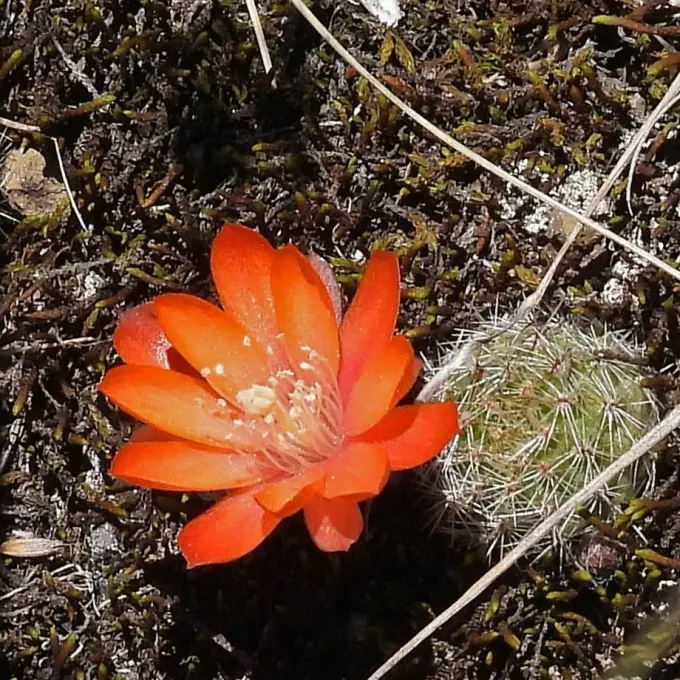
Rebutia heliosa is a member of the Cactaceae family, natively found in the rocky mountain ranges of Bolivia. It is highly valued for its striking, orange-flowered appearance and miniature growth habit.
This species thrives in a bright, sunny environment. Placing it on a south-facing windowsill is ideal, as it needs plenty of light to maintain its compact shape and to stimulate regular flowering.
The soil must be inorganic-rich and extremely porous to prevent root rot. Commercial cactus mixes should be amended with extra grit, volcanic rock, or coarse sand to improve drainage and aeration.
Temperature control is vital throughout the year. During the active growth period, it prefers warm days, while winter dormancy requires cooler temperatures between +5 and +10 degrees Celsius to induce blooming.
Watering should be done cautiously, only when the soil is completely dry. Overwatering is the most common cause of failure, as the delicate root system of this species is prone to rapid decay in wet conditions.
Main diseases and pests
Root rot is the most common threat, often resulting from excessive moisture and poor air circulation. If identified early, the plant can be saved by removing the affected roots and repotting it in dry soil.
Spider mites are prevalent in hot, dry environments, causing discolored patches on the stem. Regular cleaning and keeping the air circulation stable are the best preventative measures against these pests.
Mealybugs often infest the hidden spaces between the tubercles, appearing as white, cotton-like masses. Manual removal with a cotton swab soaked in isopropyl alcohol is an effective control method.
Scale insects can also attach to the skin of the cactus, weakening it over time. Systemic insecticides are recommended if an infestation becomes widespread and difficult to control manually.
- Consistent air circulation
- Dry winter storage
- Regular monitoring for pests