
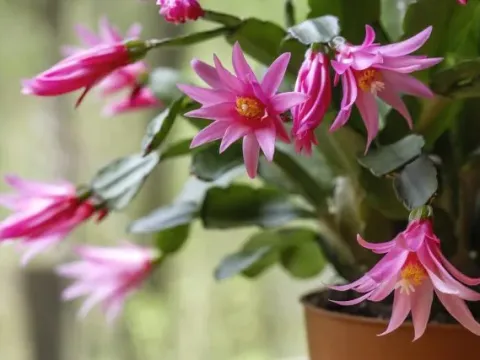
Rhipsalidopsis
Rhipsalidopsis
Rhipsalidopsis is a genus of epiphytic cacti belonging to the Cactaceae family, native to the tropical rainforests of Brazil. Unlike desert cacti, these plants thrive in dappled sunlight and humid forest environments.
What the section contains


Rhipsalidopsis
For healthy growth, the plant requires a stable temperature between 18°C and 22°C during the growing season. A cooler period with temperatures around 12–15°C in late winter is crucial for triggering flower bud development.
The substrate must be highly porous and slightly acidic, mimicking the natural humus-rich environment found in tree crevices where these cacti grow in the wild.
Regular watering is necessary, but the soil should be allowed to partially dry out between sessions. Overwatering is the most common mistake and frequently leads to terminal root decay.
High air humidity is vital for the Rhipsalidopsis, as it absorbs moisture through its aerial roots. Regular misting with soft, room-temperature water is recommended throughout the year.
Common pests affecting Rhipsalidopsis include mealybugs and spider mites, which typically thrive in warm, dry indoor conditions where air circulation is insufficient.
Fungal diseases, such as Fusarium wilt and Phytophthora root rot, are significant threats caused by excessive soil moisture and poor drainage in the potting mix.
Symptoms of distress often manifest as wilting or discolored stem segments. If detected early, affected parts can be removed and the plant repotted in fresh, sterile substrate.
Preventive maintenance involves strictly avoiding waterlogging and conducting routine visual inspections of the stems and roots to catch any infestations before they spread.
Using appropriate systemic pesticides or fungicides when necessary will protect the plant's structural integrity and ensure a vigorous blooming cycle each spring season.