
Rebutia narvaecensis
Rebutia narvaecensis
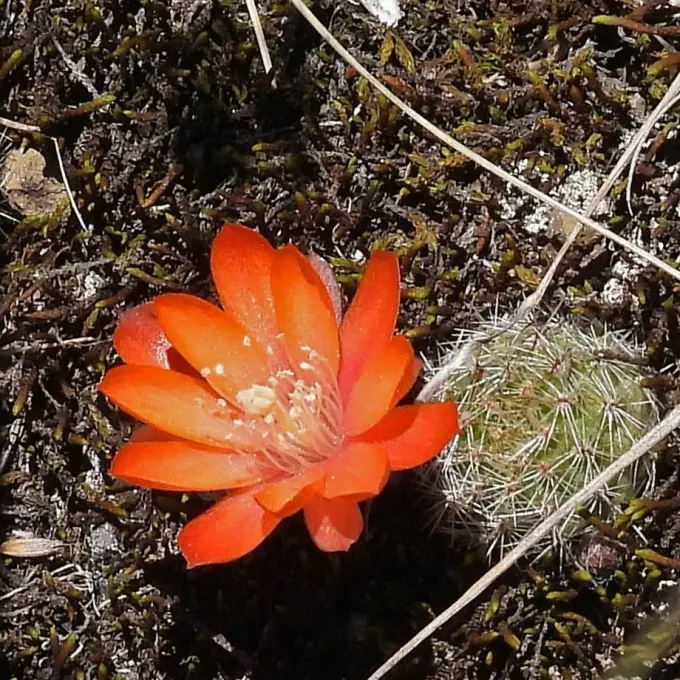
Description
Growing requirements
Rebutia narvaecensis is a charming member of the Cactaceae family, native to the high-altitude regions of Bolivia. It is widely recognized in floriculture for its compact, globose body and prolific blooming habits.
This species thrives under bright, filtered sunlight. While it appreciates intense light to maintain its shape, shielding it from harsh mid-day sun is essential to prevent epidermal scorching. Proper ventilation is also a key factor in its successful cultivation.
The substrate must be highly porous and inorganic-leaning. A mixture of pumice, perlite, and coarse sand with minimal potting soil is recommended to ensure that water drains away from the roots quickly and efficiently.
During the growing season, watering should be done sparingly, only after the soil has completely dried out. The dormancy period during winter is crucial; the plant should be kept cool and dry to initiate the formation of floral buds for the spring.
Utilized exclusively for ornamental purposes, this cactus is a staple in private collections and botanical displays. Its ability to produce large, pale-pink flowers from the base of the stem makes it a highly desirable species for succulent enthusiasts.
Main diseases and pests
The primary threat to the health of Rebutia narvaecensis is root rot caused by poor soil drainage and overwatering. It is imperative to monitor the moisture levels in the substrate to prevent systemic fungal collapse.
Common pests include spider mites, which thrive in stagnant, dry conditions, and mealybugs that can hide in the crevices between the tubercles. Regular inspections and the use of appropriate horticultural soaps are recommended for control.