
Rebutia arenacea
Rebutia arenacea
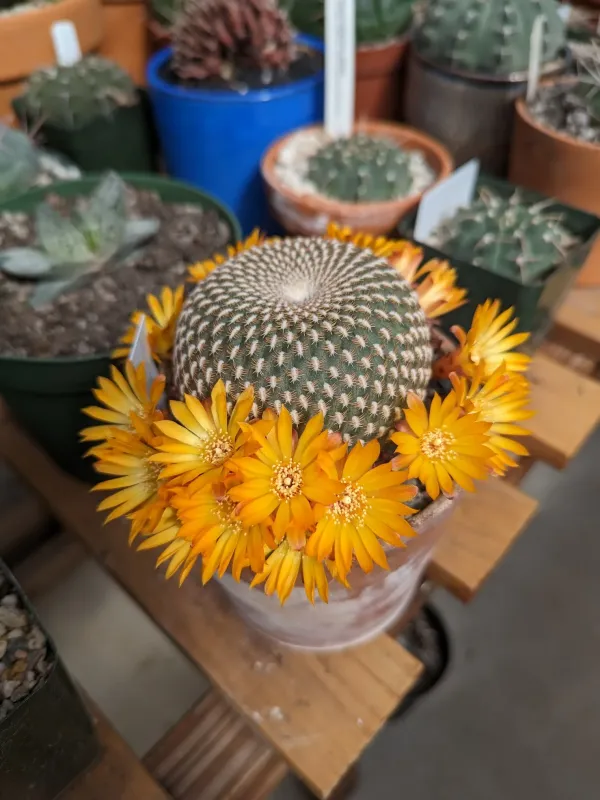
Description
Sowing dates
Sowing Rebutia arenacea seeds is best performed during early spring. This timing allows young seedlings to capitalize on the increasing light levels of the coming season, which is crucial for healthy development.
The ideal substrate for sowing consists of a fine, well-draining mixture of potting soil, leaf mold, and sharp sand. Sterilizing the soil beforehand is highly recommended to prevent fungal growth during the delicate germination phase.
Seeds are scattered thinly over the moist soil surface and should not be buried deeply, as they require some light to germinate effectively. Covering the pot with a clear plastic lid or glass sheet maintains the necessary humidity.
Maintain a constant temperature between 20°C and 25°C. Once the seeds germinate, it is vital to gradually introduce fresh air by lifting the cover daily, which helps harden off the young seedlings.
Transplanting (pricking out) should occur once the seedlings are large enough to handle, typically when they develop their first set of small spines. Proper spacing prevents overcrowding and reduces the risk of damping-off disease.
Growing requirements
Rebutia arenacea is a miniature cactus from the Cactaceae family, native to the rugged terrains of Bolivia. It is well-adapted to high-altitude environments characterized by intense solar radiation and significant diurnal temperature shifts.
In cultivation, this plant requires high light intensity, ideally direct sunlight for several hours each day. If the light levels are insufficient, the plant will lose its compact shape and fail to produce its vibrant, characteristic blooms.
The soil requirements focus on drainage. A mix containing significant inorganic components like pumice, lava rock, or coarse sand is essential. The pot must have clear drainage holes to prevent the roots from sitting in stagnant water.
Watering should be deep but infrequent, strictly following the "soak and dry" method. During the winter months, the plant must be kept in a cool, dry location to induce dormancy, which is vital for spring flowering.
Adequate ventilation is critical for this species. Providing fresh air movement prevents the buildup of humidity around the stem, which is a common trigger for fungal infections in desert succulents.
Main diseases and pests
The most significant threat to Rebutia arenacea is stem and root rot, usually caused by overwatering or poor drainage. Once decay begins, it can spread rapidly, often leading to the collapse of the plant.
Red spider mites are the most common pest, especially in dry indoor environments. They feed on the plant's surface, causing unsightly yellowing or scarring that detracts from the plant's overall aesthetic value.
Mealybugs can also infest the plant, settling into the crevices between the tubercles. These pests extract sap and produce a white, waxy secretion that creates a haven for further bacterial or fungal colonization.
For effective control, use systemic insecticides formulated for succulents. It is also important to isolate any newly acquired plants to prevent the introduction of pests to the rest of your collection.
- Use only well-draining mineral-based potting mixes.
- Maintain a strict dry period during winter dormancy.
- Monitor the crevices between tubercles for signs of pests weekly.