
Rebutia cintia
Rebutia cintia
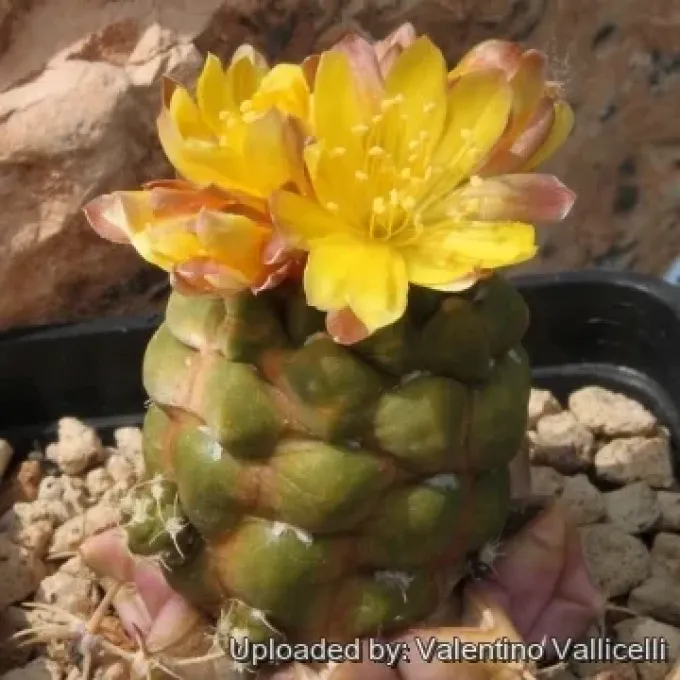
Description
Sowing dates
Sowing seeds of Rebutia cintia (formerly Cintia knizei) is best performed in early spring to utilize the natural light increase. A sterile, well-draining mineral-based substrate is the foundation for successful germination.
Seeds should be distributed evenly on the surface and pressed slightly into the substrate without covering them too deeply. Maintaining a stable moisture level using a covered container ensures the seeds do not dehydrate during the initial stages.
The germination temperature should stay between 20°C and 25°C. A consistent source of bright but diffused light is essential to prevent the seedlings from stretching or burning while their tissues are still fragile.
Seedlings remain in the germination container for several months until they develop enough spines to withstand standard handling. Gentle ventilation is necessary to prevent fungal overgrowth in the humid environment.
Patience is key during the first two years of development, as the species grows slowly. Ensuring a gradual transition to drier air helps the young cacti harden off and develop stronger protective structures.
Growing requirements
Rebutia cintia is a member of the Cactaceae family, native to the rugged, high-altitude regions of Bolivia. It is uniquely adapted to thrive in nutrient-poor, rocky substrates where drainage is almost instantaneous.
The ideal growing medium consists primarily of mineral components such as grit, pumice, and expanded clay. Minimal organic material, such as finely sifted leaf mold, may be added to sustain plant health over time.
Intense, direct sunlight is vital for the development of healthy, dense spine structures and characteristic coloration. In a controlled environment, these plants require high luminosity and excellent airflow to maintain their structural integrity.
A strictly controlled watering schedule is required: water only during the growing season and allow the substrate to dry completely between sessions. Excessive moisture is the primary cause of root failure in this culture.
Winter dormancy is crucial for Rebutia cintia. During this period, the plants should be kept dry and cool, ideally between 5°C and 10°C, to trigger the necessary physiological processes for spring blooming.
Main diseases and pests
The most common disease affecting Rebutia cintia is root rot, which stems from overly frequent irrigation or inadequate soil drainage. Once rot sets in, systemic control is difficult, necessitating the removal of the plant.
Spider mites are the most persistent pests for this species, causing unsightly damage to the epidermis. Regular inspection and the application of suitable miticides are recommended to manage mite populations effectively.
Root mealybugs present a significant challenge by colonizing the root system and depriving the plant of nutrients. Systematic treatment with specialized insecticides and root inspections during repotting help mitigate this risk.
Stem cracking can occur due to sudden, heavy watering after a period of prolonged drought. This physiological response can lead to localized tissue necrosis, providing an entry point for fungal infections.
General hygiene in the greenhouse, including the sterilization of tools and the use of clean containers, is the most effective form of prevention. Early diagnosis of any discoloration on the plant's surface is essential for preserving the specimen.