
Rebutia fabrisii
Rebutia fabrisii
Description
Growing requirements
Rebutia fabrisii belongs to the Cactaceae family. This species of miniature cacti originates from high-altitude regions of Argentina, where it grows in rocky soils under conditions of intense solar radiation and significant daily temperature fluctuations.
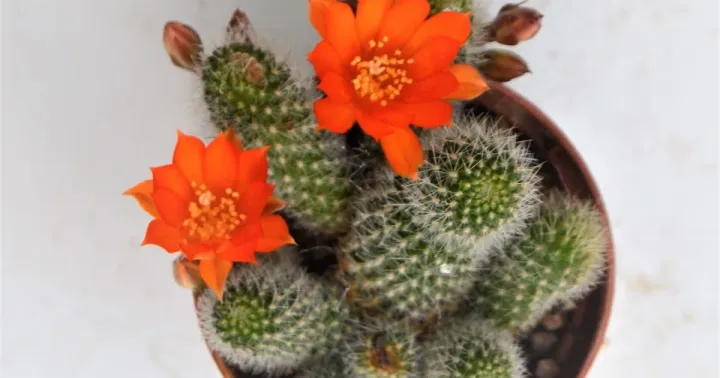
The plant features a small spherical or cylindrical stem that often clusters at the base. A distinctive characteristic is the presence of dense, soft spines that completely cover the cactus body, protecting it from excessive moisture evaporation in its natural habitat.
For successful cultivation, it is necessary to provide the plant with maximum natural light, preferably direct morning or evening sunlight. In partial shade, the cactus loses its compact shape, the stem becomes etiolated, and flowering becomes extremely sparse or ceases entirely.
Soil requirements include excellent drainage and air permeability. An optimal substrate is considered to be a mixture of sod soil, coarse sand, gravel, and perlite in equal proportions, with soil acidity maintained at a slightly acidic or neutral level.
The temperature regime during the summer period should correspond to a warm climate, but in winter, the plant requires a dormant period at reduced temperatures (from +5 to +10 degrees Celsius). This is a critical factor for stimulating annual flowering, which is highly decorative in this species.
Main diseases and pests
The main pests threatening this species are the red spider mite and the mealybug. These insects multiply rapidly in dry and hot air, sucking juices from the plant's soft tissues, which leads to stem deformation and a weakened immune system.
A critical health risk is the development of root and stem rots. These diseases occur due to water stagnation in the soil, especially when combined with low temperatures during the winter dormancy period, leading to rapid decay of the root system.
Disease prevention consists of strictly following the watering regimen. In summer, watering is performed only after the root ball has completely dried out, while in winter, it is almost completely excluded, allowing the plant to prepare for the growing season.
To combat insects, it is recommended to use specialized systemic acaricides and insecticides. The application of chemical agents must strictly follow the instructions to avoid damaging the sensitive epidermis of the cactus.
In case of rot, immediate repotting with the removal of damaged root sections is recommended. After sanitary treatment, it is necessary to use fresh, well-sterilized substrate, avoiding excessive moisture during the rooting phase.