
Rebutia marsoneri
Rebutia marsoneri
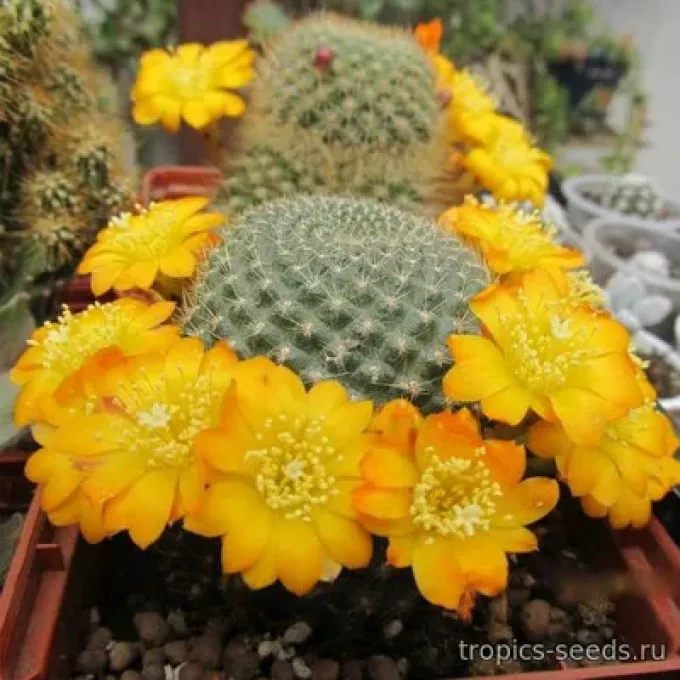
Description
Sowing dates
The propagation of Rebutia marsoneri in professional and collection settings is primarily achieved through seeds. Sowing should ideally take place during the spring months, specifically from March to April, to coincide with increasing daylight hours.
Successful germination requires a specialized, sterile substrate that is highly porous to prevent waterlogging. A mixture of fine-grained sand and grit is ideal, ensuring the soil remains moist but never saturated.
Seeds are sown on the surface and pressed lightly into the substrate without being covered by a thick layer of soil. Covering the pots with glass or transparent plastic is necessary to maintain a constant high humidity level during the early stages.
Optimal temperatures for germination range between 20 and 25 degrees Celsius. Once the seeds sprout, the cover should be removed gradually to allow the seedlings to acclimate to the ambient air and prevent fungal growth.
Young plants should be kept away from direct, harsh sunlight until they have developed a robust root system. Pricking out or transplanting occurs once the seedlings have reached a sufficient size to be handled without damage.
Growing requirements
Rebutia marsoneri belongs to the Cactaceae family and originates from the mountainous regions of Argentina. It is a high-altitude species evolved to thrive in environments with significant temperature fluctuations and intense solar radiation.
The culture requires a mineral-based, well-draining substrate with low organic content. A blend of turf, coarse sand, and expanded clay or perlite is essential to simulate its natural habitat and promote healthy root development.
Light is a critical factor for this species. To maintain its compact, globose shape and ensure prolific flowering, the plant needs access to maximum direct sunlight. Inadequate light results in etiolation, which permanently ruins the plant's aesthetic and vigor.
Watering practices must be disciplined: allow the substrate to dry out completely between waterings. During the active growth season, water should be applied only when the plant is not in its dormant stage to prevent root rot.
A period of winter dormancy is strictly required for the plant to flower. During this time, the cactus must be kept in a cool environment, ideally between 5 and 10 degrees Celsius, with minimal or no irrigation to induce blooming.
Main diseases and pests
Spider mites are the most frequent pest encountered in greenhouse cultivation, especially when the air is too dry. Their presence is indicated by fine webbing and yellowing patches on the cactus epidermis.
Root mealybugs present a significant challenge as they remain hidden beneath the soil. These pests feed on the roots, causing the plant to show signs of stunted growth or sudden collapse if not treated with appropriate systemic insecticides.
Fungal rots, including Fusarium and Phytophthora, are common if the substrate remains wet for extended periods, especially in low light or cool conditions. Such infections often start at the base of the stem and can be fatal.
Sunburn can occur when plants are moved from a dark winter location to direct summer sun too quickly. A gradual acclimation process is necessary to protect the plant's delicate tissues during the transition phase.
Poor ventilation promotes the spread of pathogens throughout the cultivation area. Maintaining proper airflow is essential to keep the surface of the plants dry and to inhibit the development of molds and other fungal entities.