

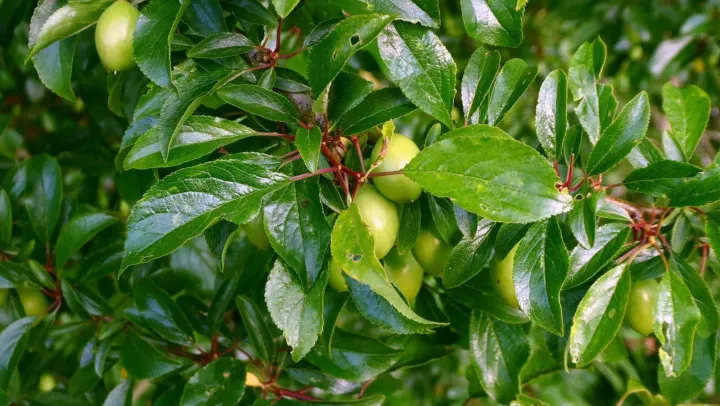
Description
Sowing dates
European plum (Prunus domestica L.) belongs to the Rosaceae family. In commercial cultivation, this species is propagated through grafting high-quality cultivars onto rootstocks to ensure uniform growth and fruit quality.
The optimal time for planting young trees is in early spring, before the buds begin to break, or in late autumn, allowing the roots to settle before the harsh winter conditions.
Proper site selection is essential, as plum trees require full sun exposure and well-drained soil to thrive, avoiding locations prone to late spring frosts which can damage flowers.
The planting distance varies depending on the rootstock used, ranging from 3 to 5 meters, which provides sufficient space for root development and adequate canopy air circulation.
Soil preparation involves deep tilling and the incorporation of organic matter such as compost or well-rotted manure, which supports the tree's establishment in the first few years.
Growing requirements
Plum trees are moisture-sensitive and require consistent irrigation, yet they cannot tolerate waterlogged soils, which can lead to root rot and other physiological disorders.
Loamy, nutrient-rich soils with a pH level between 6.0 and 7.5 are ideal, ensuring efficient nutrient uptake and providing a stable foundation for the tree's growth.
Regarding climate, the European plum prefers temperate regions with moderate summers and sufficient winter chilling hours, which are necessary for proper dormancy and spring budding.
Good orchard management involves regular cultivation of the soil surface, mulching to retain moisture, and balanced fertilization programs customized to the tree's seasonal needs.
Pruning is critical to maintain an open-center or central-leader structure, which ensures sunlight penetrates the center of the canopy, improving both fruit ripening and disease control.
Yield
Yield capacity of Prunus domestica depends heavily on the specific cultivar and pollination success, as many varieties are self-sterile and require another compatible tree nearby.
Under optimal management, a healthy adult tree can produce between 30 and 60 kilograms of fruit per season, depending on tree age, soil quality, and local climate conditions.
Plums are used for fresh consumption as well as industrial processing, including the production of prunes, juices, jams, jellies, and various fermented beverages.
To ensure consistent annual yields, growers focus on fruit thinning to prevent limb breakage and to improve the size and quality of the remaining fruits on the tree.
The peak productive life of a plum orchard typically spans several decades, provided that pests and diseases are effectively managed through integrated orchard practices.
Main diseases and pests
Major diseases affecting plum trees include brown rot (Monilinia), shot hole disease, and plum pox virus, all of which require proactive monitoring and timely treatment.
Common insect pests include the San Jose scale (Diaspidiotus perniciosus) and the plum fruit moth, which can severely damage fruit quality and tree vigor if left unchecked.
While greenhouse whiteflies, cabbage white butterflies, or pea weevils are not primary threats to stone fruits, maintaining a clean orchard environment helps minimize secondary pest pressure.
Integrated pest management (IPM) strategies, including pheromone traps, biological control agents, and precise application of insecticides, are essential for maintaining tree health.
Sanitation practices, such as removing mummified fruit and fallen leaves, are vital for reducing the overwintering population of pathogens and preventing future outbreaks in the orchard.
Harvesting
Harvest timing is critical and depends on the intended end-use of the fruit, whether it is for immediate fresh market sale or for subsequent long-term storage and processing.
Fruits are often harvested slightly before full maturity for transportability, as they continue to ripen post-harvest, maintaining better firmness during distribution.
Careful hand-picking is required to avoid damaging the skin, as any physical injury to the fruit surface acts as an entry point for spoilage pathogens like rot-causing fungi.
Picking should ideally take place during dry, cool weather to maximize the storage potential of the fruit and to facilitate efficient handling and sorting procedures.
Once harvested, cooling the fruit rapidly is recommended to slow down respiration rates, thereby extending the shelf life and ensuring that the final consumer receives high-quality produce.
In brief
36
Crop pests
Content graph
Crop pests · 36
Alfalfa seed chalcidAphidAustrian beetleBeet flea beetleBeet webwormCereal leaf beetleChloropid fliesCodling mothCotton bollwormDiamondback mothEuropean corn borerEuropean vine mothGall midgesGrape phylloxeraGreen apple aphidGreenhouse whiteflyHemp flea beetleLarge whiteLeafhoppersLeaf miner mothLeaf minersMealy plum aphidOriental fruit mothPea aphidPea weevilPollen beetlePotato tuber mothPyralid mothsSan Jose scaleSawfliesSoft scalesSucking pestsSucking pests complexSunn pestTwo-spotted spider miteWeevil
Content graph
Connections · European plum
Most often together:
Marketplace
Products · 242
All 242
Plum 150
Insecticides, Acaricides 55
Fungicides 25
Herbicides, Desiccants 5
Fertilizers 5
Plant Growth Regulator 2


Agil 100
F.A.GAN Chemical Manufacturers Ltd. Israel, member
Herbicides
0
0
·
2.3K
7 offers
5.03 €per 1 l
Buy



Puska
Три Дельта Компані Інтернешнл, Гонконг, Китай.
Insecticides
1
0
·
1.9K
1 offer
7.76 €per 1 l
Buy



Graphis
Три Дельта Компані Інтернешнл, Гонконг, Китай.
Insecticides
0
3
·
756
4 offers
0.89 €per 1 l
Buy


Kordon
Три Дельта Компані Інтернешнл, Гонконг, Китай.
Insecticides
0
0
·
668
2 offers
0.89 €per 1 l
Buy


