

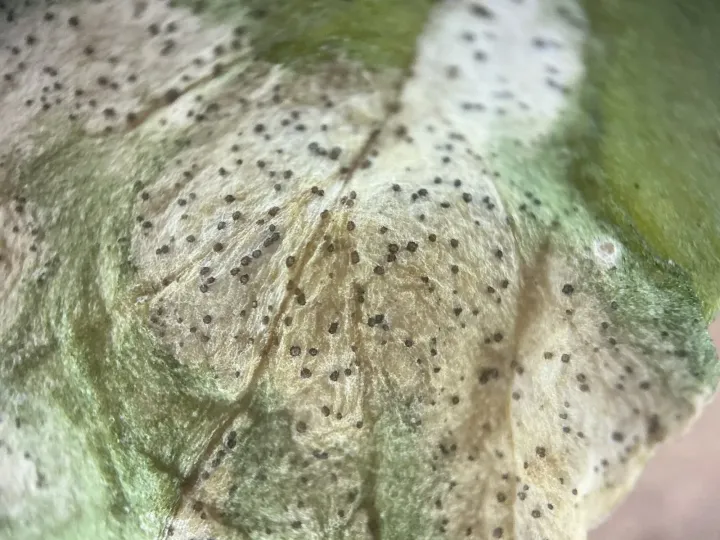
Description
Symptoms
The initial symptoms of Septoria usually appear as small, chlorotic spots on the lower leaves. As the disease progresses, these spots expand, often becoming irregular or angular in shape, and change color to brown or gray.
A definitive diagnostic feature of Septoria is the appearance of tiny, dark black specks within the necrotic lesions. These are the pycnidia, and they are typically visible to the naked eye or with a hand lens.
In cases of severe infection, individual spots merge together to form large necrotic patches. This leads to early leaf senescence and defoliation, which severely limits the plant's capacity for photosynthesis.
When the stems or fruits are affected, the tissue can show sunken spots or distorted growth. For instance, in watermelons, fruit quality is significantly compromised by these surface lesions.
Under humid conditions, the surface of the lesions may appear slightly fuzzy or damp due to the mass extrusion of spores from the pycnidia, providing a visual confirmation of active fungal activity.
Pathogen
Septoria is a major genus of fungi responsible for various leaf spot diseases in a wide range of plants. These pathogenic fungi primarily infect the leaves, but can also colonize stems, petioles, and fruits depending on the specific host plant.
The disease is caused by different species of Septoria fungi, which are characterized by the production of pycnidia. These small, flask-shaped fruiting bodies emerge on the surface of infected tissues and release large quantities of spores during periods of high humidity.
Pathogen survival is achieved through resting structures in crop residues, soil, and sometimes infected seeds. Many weed species serve as alternative hosts, maintaining the inoculum source throughout the year.
The host range of Septoria species is exceptionally diverse. It commonly affects economically important plants such as oats, hemp, safflower, citrus, hazelnuts, watermelons, carnations, and Carpathian bellflowers.
Each Septoria species shows high host specificity, meaning the fungus infecting a hazelnut is distinct from the one targeting wheat or watermelons, although their life cycles share fundamental similarities.
Conditions for development
Septoria thrives in warm, moist environments. Optimal development occurs at temperatures between 18°C and 25°C, coupled with high relative humidity or prolonged leaf wetness.
Rain splash is the primary mechanism for spore dissemination. Droplets landing on infected leaves pick up conidia and splash them onto healthy upper foliage, creating a chain reaction of secondary infections.
High planting density reduces air circulation within the canopy, leading to a microclimate that remains humid for longer periods. This creates the perfect conditions for a severe Septoria outbreak.
Inadequate crop rotation allows for the accumulation of fungal spores in the soil. Without a break in the planting cycle, the inoculum levels increase year over year, making the disease increasingly difficult to control.
Overwintering conditions, such as mild temperatures and damp debris, significantly enhance the survival rate of the fungus, leading to higher initial infection levels in the spring.
Why it matters
The primary damage caused by Septoria is the loss of functional leaf surface area. As the leaves wither and drop, the plant loses its ability to produce energy, which directly impacts yield quantity and quality.
In cereals, infection can lead to shriveled grains and reduced test weight. In fruits and flowers, the lesions damage the appearance and quality, often making the produce unsuitable for the market.
Plants affected by Septoria are often stunted and exhibit weakened physiological vigor. This makes them more susceptible to drought, nutritional deficiencies, and secondary infestations by other pests or pathogens.
Economic losses can be substantial, sometimes exceeding 30-50% in untreated fields during favorable weather conditions. Effective management is essential to prevent these losses and maintain profitability.
The cumulative effect of reduced photosynthesis and plant stress often results in smaller fruits, lower seed viability, and overall reduced biomass, impacting both current harvest and future planting potential.
Protection
Integrated Pest Management (IPM) is the best approach for controlling Septoria. The foundation of this strategy is a rigorous crop rotation schedule that interrupts the life cycle of the specific Septoria species.
Sanitation practices, including the removal and destruction of crop residues, significantly reduce the primary inoculum load. Deep plowing can bury infested debris, speeding up decomposition and reducing spore release.
Selecting and planting resistant or tolerant cultivars is the most sustainable and cost-effective management strategy. Genetic resistance provides a strong defense against fungal colonization.
Chemical control involving fungicides from the triazole or strobilurin classes is effective when applied preventatively or at the first sign of symptoms. Proper timing is critical to minimize the spread.
Maintaining balanced soil fertility and avoiding excessive nitrogen fertilizer helps keep plants in a robust state, naturally increasing their resilience against fungal pathogens like Septoria.
In brief
34
Affects crops
Biology
Pathogens and affected parts
Pathogens
Septoria· fungus
Septoria azalea· fungus
Septoria passerinni· fungus
Septoria nodorum· fungus
Septoria campanulae· fungus
Septoria albopunctata· fungus
Septoria darrowii· fungus
Septoria rubi· fungus
Septoria dianthi· fungus
Septoria citri· fungus
Septoria cucurbitacearum· fungus
Septoria ostryae· fungus
Affected plant parts
leafwhole plantstemfruit
Content graph
Affects crops · 34
AzaleaBarberton daisyBilberryCarnationCarpathian bellflowerCitrusCommon grape vineCommon hopCommon oatCommon pearField mintFlaxFuchsiaHazelnutIndustrial hempJerusalem artichokeLettuceLinseedPassiflora L.PeaPeppermintPistachioPotatoRed raspberryRoseRyeSafflowerSpearmintStrawberrySunflowerSweet potatoWatermelonWinter barleyWinter wheat
Content graph
Connections · Septoria
Most often together:
Marketplace
Products · 2590




Community
Discussion
No discussions yet — be the first.