
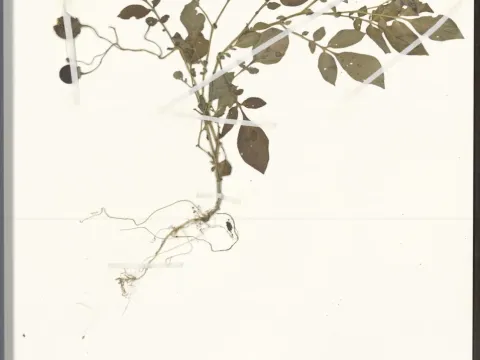
Solanum verrucosum
Solanum verrucosum
Sowing Solanum verrucosum seeds is typically conducted in controlled greenhouse conditions to ensure the preservation of its genetic identity. Seeds are sown in sterile potting mixes during late winter.
What the section contains
Solanum verrucosum
Seed stratification may be required to break dormancy and ensure uniform germination. Consistent soil moisture and a temperature of approximately 20°C are essential for success.
Seedlings are transplanted into larger pots once they reach the two-leaf stage. Careful handling of the root system is necessary to prevent transplant shock during the transition to experimental plots.
Spacing requirements are designed to minimize competition while allowing for individual plant assessment. When planted in field nurseries, wide spacing facilitates easier monitoring for pests and diseases.
Research settings often prefer containerized growing to isolate the plants from external cross-pollination and soil-borne contamination.
Native to the high altitudes of Mexico, Solanum verrucosum is well-adapted to cool and humid climates. It thrives best in environments where temperatures remain moderate during the growing season.
Well-drained, sandy loam soils with high organic matter content provide the best foundation for root development. Soil pH levels should be maintained between 5.5 and 7.0 for optimal nutrient availability.
The plant demonstrates a strong response to photoperiod; a long-day environment is generally preferred for robust growth and tuberization. Inadequate light intensity can lead to spindly growth.
Regular but controlled irrigation is required, as the species is sensitive to both waterlogging and prolonged drought. Monitoring moisture levels helps in maintaining plant vigour throughout the lifecycle.
Minimal nutrient input is recommended, focusing on a balanced N-P-K approach. Excess nitrogen often triggers excessive vegetative growth at the expense of root and tuber formation.
The species is susceptible to standard potato pests, including the Colorado potato beetle and various aphid species. Aphids are particularly problematic due to their role as virus vectors.
Late blight (Phytophthora infestans) is the most significant disease threat to Solanaceae, though Solanum verrucosum is frequently studied precisely for its natural resistance genes.
Root-knot nematodes can cause significant damage to the root system, potentially hindering the development of tubers and overall nutrient uptake. Soil sterilization is often practiced in greenhouse research.
Fungal pathogens causing tuber rot can develop if soil conditions become excessively wet or poorly aerated. Proper drainage is the primary cultural control measure against these issues.
Effective biosecurity and integrated pest management (IPM) strategies are crucial for maintaining healthy populations of this wild species in breeding collections.