
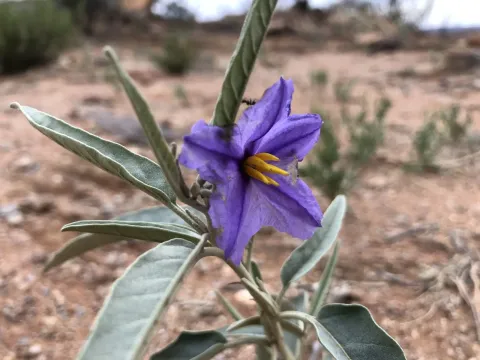
Sturt's Nightshade
Solanum sturtianum
Sturt's Nightshade (Solanum sturtianum) is a perennial shrub belonging to the Solanaceae family, native to the arid interior regions of Australia. It is highly valued for its natural resilience and adaptation to harsh desert environments.
What the section contains
Sturt's Nightshade
The plant thrives in sandy or well-drained loamy soils. It requires full sun exposure and is highly tolerant of drought and alkaline soil conditions, making it suitable for regions with limited rainfall.
Agrotechnical management is relatively simple as the plant does not require high levels of fertilization. In fact, excessive nutrients can hinder its natural adaptation to lean, nutrient-poor soil.
Climatic requirements focus on high heat and arid conditions. While it can withstand cold spells, it is not tolerant of prolonged freezing, especially in combination with moist soil conditions.
Botanical features include distinct grey-green foliage covered in fine hairs to prevent water loss and large, star-shaped purple flowers that bloom periodically under favorable weather conditions.
Root rot is the primary physiological threat caused by poor soil drainage. Ensuring that the site remains dry during the dormant season is essential for long-term plant survival.
Pests such as aphids and spider mites can colonize the foliage during the growing season. Early detection and targeted biological control methods are recommended over harsh chemicals.
Fungal diseases like powdery mildew may occur if air circulation is insufficient. Thinning the canopy or spacing plants correctly helps mitigate this risk.
Viral infections transmitted by sap-sucking insects can cause mosaic symptoms, reducing the overall vitality of the crop. Maintaining a weed-free area reduces the population of potential insect vectors.
Competition from invasive weeds can stifle young seedlings, so weed control is mandatory during the establishment phase of the crop lifecycle.