
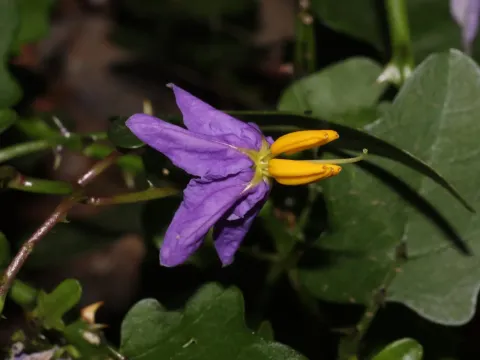
Solanum trilobatum
Solanum trilobatum
Solanum trilobatum is a perennial climbing plant typically propagated by seeds or stem cuttings. Successful germination requires a warm, humid environment with soil temperatures consistently maintained between 22 and 25 degrees Celsius.
What the section contains
Solanum trilobatum
When starting from seeds, use a light, well-draining potting medium. Cover the seeds lightly, as they require a certain amount of light for optimal germination. Maintain high humidity levels during the initial stages of seedling development.
Transplanting into the field should occur only after all risks of frost have passed. The plant is highly sensitive to cold, and even minor temperature drops can significantly stunt growth or kill young specimens.
Proper spacing is crucial for this vigorous climber. A minimum of 80 centimeters between plants allows for adequate air circulation, which is essential to prevent the buildup of pathogens within the dense foliage.
Regular monitoring of young plants is necessary to ensure they establish strong root systems before the onset of extreme heat or heavy rainfall seasons.
This species thrives in tropical and subtropical climates, necessitating full sun exposure to produce high levels of bioactive compounds. It performs best in regions with long, warm growing seasons.
The soil should be fertile, sandy loam or loamy soil, with a pH ranging from 6.0 to 7.0. Excellent drainage is non-negotiable; waterlogged soil leads to rapid root rot and overall plant decline.
While the plant requires sufficient moisture to support its rapid growth, it does not tolerate stagnant water. Irrigation should be deep but spaced out to allow the soil surface to dry slightly between waterings.
Nutritional needs are met through balanced fertilization. High-nitrogen fertilizers support leaf development, while phosphorus and potassium are essential for flower and fruit production during the peak season.
In cooler temperate regions, Solanum trilobatum should be grown in containers that can be moved into greenhouses or indoor spaces when temperatures fall below 15 degrees Celsius.
The economic yield of Solanum trilobatum primarily involves the harvest of leaves, stems, and roots. Yield is highly dependent on environmental stability and the level of inputs like water and fertilizer provided.
Pharmacological potency is highest at the onset of flowering. Therefore, timing the harvest to coincide with this phenological stage is essential for obtaining high-quality material for industrial processing.
Multi-cut harvesting of foliage can be practiced throughout the growing season if the plant is well-fed. However, managers must avoid over-harvesting to allow the plant to regenerate for subsequent years.
Proper post-harvest processing, including controlled drying temperatures below 40 degrees Celsius, is vital. This preserves the alkaloids and steroidal saponins responsible for the plant's medicinal value.
Industrial output can be significant in established plantations, provided that the soil is regularly amended with organic matter to sustain the plant's high growth rate over multiple harvest cycles.
Solanum trilobatum is frequently attacked by pests common to the nightshade family, including aphids, whiteflies, and spider mites. These pests feed on the undersides of leaves, causing chlorosis and reduced photosynthesis.
Fungal diseases, such as leaf spot and late blight, can emerge during periods of high humidity and poor ventilation. Preventive measures include thinning foliage and ensuring the plants are not overcrowded.
Biological control agents, such as predatory mites or ladybugs, are highly effective in managing pest populations without the need for synthetic chemicals, which is crucial for medicinal-grade crops.
Strict hygiene protocols, including cleaning tools between rows and removing infected plant tissue, help break the cycle of disease. Crop rotation is also recommended every three years to maintain soil health.
- Spider mites: Proliferate in dry, hot conditions.
- Whiteflies: Major vectors for viral infections.
- Leaf spot: Caused by excessive moisture and poor airflow.
Harvesting the aerial parts is done using clean, sharp secateurs to prune the branches. The plant should be cut carefully to leave healthy nodes that allow for rapid regrowth after the harvest.
Roots are typically harvested in the autumn when the plant enters a dormant phase, as this is when the concentration of secondary metabolites in the roots is at its highest.
Immediate cleaning is necessary after the harvest. The roots must be washed thoroughly to remove all soil particles, then sliced into manageable pieces to ensure even and rapid drying.
Hygiene is paramount during the entire process to prevent contamination by mold or bacteria. The use of clean harvesting containers and sanitized drying surfaces is standard practice.
Final storage of the dried product must occur in cool, dark, and airtight conditions to prevent degradation of the active components by UV light and atmospheric moisture.