
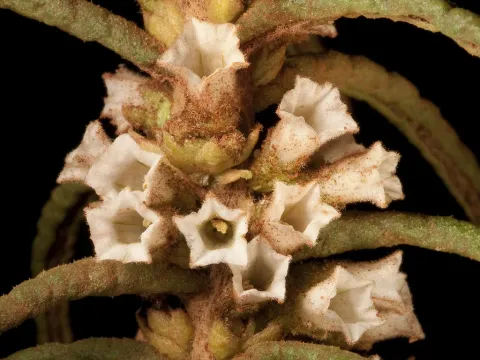
Symonanthus
Symonanthus
Symonanthus is a monotypic genus belonging to the Solanaceae family, comprising the species Symonanthus aromaticus. This plant is a native shrub primarily found in the sandy arid regions of Western Australia, where it has evolved to thrive in harsh environments.
What the section contains

Symonanthus
The plant features woody stems and specialized foliage, often characterized by glandular hairs that contribute to its distinct aromatic profile. Its growth habit is typical of Australian sclerophyllous vegetation, emphasizing survival in water-limited conditions.
Cultivation of Symonanthus requires specific conditions that mimic its natural habitat, particularly well-drained, nutrient-poor sandy soils. It is highly intolerant of waterlogged soil conditions, which frequently lead to root rot and rapid plant decline.
The plant is exceptionally drought-tolerant and thrives in full sun exposure. In managed landscapes, it requires minimal irrigation once established and should be kept away from heavy soils or nutrient-rich organic amendments that may negatively affect its development.
The primary use of Symonanthus is in specialized horticulture and xeriscaping projects. It serves as an excellent specimen for arid zone gardening, providing unique texture and a pleasant fragrance while supporting the biodiversity of water-wise plant communities.