
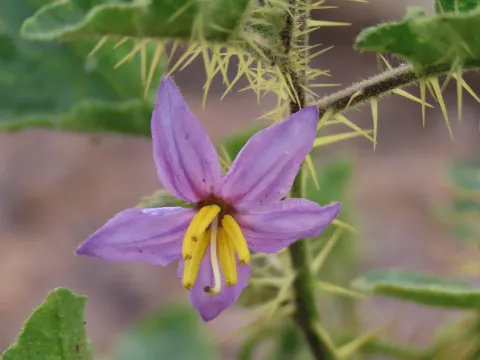
Solanum rigescens
Solanum rigescens
Sowing Solanum rigescens requires careful preparation of the seeds, as they often exhibit a period of dormancy. The optimal time for planting is early spring when soil temperatures consistently reach at least 15 degrees Celsius.
What the section contains
Solanum rigescens
To improve germination rates, it is highly recommended to stratify the seeds for approximately 30 days under cool conditions. This process triggers natural biological signals for development and ensures more uniform seedling emergence.
Seeds should be sown in loose, well-draining soil at a depth of no more than 1–2 centimeters. Maintaining consistent moisture in the topsoil layer is essential during the initial germination phase for these small seeds.
In commercial operations, sowing is often conducted in greenhouse flats to establish a strong root system before transplantation into the open field. This strategy protects young plants from unpredictable weather and ensures a healthy growth start.
Spatial isolation between Solanum species is vital to prevent cross-pollination and potential genetic drift. Maintaining clean rows also aids in future maintenance and easier identification of potential pest incursions.
As a member of the Solanaceae family, Solanum rigescens has a high demand for solar exposure. It thrives in open locations where it can receive direct sunlight for the majority of the day to support its vigorous vegetative development.
The ideal soil profile consists of light, sandy loam or loamy soils with a slightly acidic to neutral pH. Proper soil aeration is critical, as the roots are sensitive to hypoxia resulting from waterlogging or heavy soil compaction.
The plant responds well to balanced nutrient applications, particularly those rich in potassium and phosphorus during the onset of the flowering stage. These elements are essential for structural integrity and the development of quality fruit.
Temperature management is crucial; the plant prefers warm conditions without significant nocturnal temperature drops. In regions with cooler climates, the use of row covers or greenhouse environments can significantly boost performance.
While the plant shows moderate drought tolerance, adequate moisture is required during the fruiting period. Irrigation should be managed carefully to ensure soil moisture remains consistent without creating saturated, anaerobic conditions.
The yield of Solanum rigescens is heavily influenced by the quality of agricultural management and soil fertility levels. Producers can expect stable yields when best practices in irrigation and nutrient dosing are applied.
Productivity typically peaks during the second and third years of the plant's life cycle. As the plant matures and develops a woody skeletal structure, its capacity to produce fruit and biomass increases significantly.
Implementation of drip irrigation and fertigation systems has shown to be the most efficient method for increasing yield. By delivering precise amounts of water and nutrients to the root zone, plant stress is minimized, and growth rates are optimized.
Harvesting strategies must be executed with precision to maximize the quantity of marketable goods. Regular pruning of old, non-productive branches is recommended to divert energy into new, fruit-bearing growth for subsequent seasons.
Economic success in cultivating this species often depends on post-harvest handling. Minimizing mechanical stress on the fruit during collection and transport preserves the integrity and market value of the final product.
Solanum rigescens faces common threats within the Solanaceae family, such as late blight and alternaria leaf spot. These diseases are more prevalent in humid environments, necessitating proactive fungicide applications.
Pests like the Colorado potato beetle and spider mites are major concerns. Integrated pest management, involving the use of beneficial insects and timely pesticide application, is necessary to mitigate significant crop damage.
Viral infections, often transmitted by aphids, pose a severe threat to crop health. Constant monitoring for vector insects and the immediate removal of symptomatic plants are standard preventive measures for maintaining plantation health.
Root rot is typically associated with poor drainage or overwatering. Maintaining a strict irrigation schedule and ensuring the soil has adequate porosity are key components in preventing these underground pathogens.
- Regular monitoring: Weekly inspections of the foliage for early signs of disease.
- Preventive maintenance: Ensuring proper aeration and avoiding excessive overhead irrigation.
- Biological controls: Utilizing predator species to control mite populations in sustainable setups.
Harvesting is usually done by hand once the fruit reaches full physiological maturity, as indicated by color changes. Careful inspection during harvest ensures that only mature, high-quality fruit is collected.
The harvesting period is often extended due to the asynchronous ripening of the fruit. This requires multiple passes over the fields to ensure all ripe fruit is gathered in its optimal state.
Post-harvest processing requires immediate cleaning to remove organic debris and foreign material. Proper sanitation at this stage prevents the onset of mold during the storage phase.
Drying is a critical step, and it must be done under controlled temperature conditions—ideally between 40 and 50 degrees Celsius—to prevent the degradation of essential chemical compounds present in the fruit.
Stored products should be kept in well-ventilated, dry containers to prevent re-absorption of moisture. A climate-controlled storage environment is essential for maintaining product quality over extended periods.