
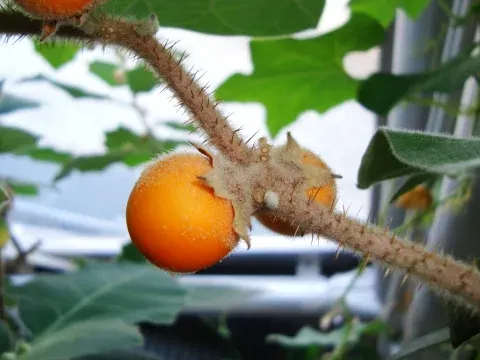
Solanum pseudolulo
Solanum pseudolulo
Sowing seeds of Solanum pseudolulo should be done in early spring in a controlled indoor environment to provide a sufficiently long growing season.
What the section contains
Solanum pseudolulo
Seeds are known for their dormancy and slow germination rates, so pre-treatment such as soaking or stratification is highly recommended for better success.
Maintain a constant temperature between 22 and 25 degrees Celsius during the germination phase to ensure healthy and uniform seedling emergence.
Seedlings should be transplanted into individual pots once they reach the two-leaf stage, using a nutrient-rich, well-draining soil mix for development.
Final transplanting into the field or greenhouse must be delayed until all risks of frost have passed and night temperatures remain consistently warm.
As a member of the Solanaceae family originating from tropical South America, this plant thrives in areas with bright, indirect sunlight and high humidity.
Soil requirements include high organic matter content, excellent drainage, and a slightly acidic to neutral pH level to optimize nutrient uptake.
Consistent moisture is crucial for plant development, especially during the flowering stage, though waterlogging must be avoided to prevent root diseases.
When grown in greenhouse settings, maintaining proper airflow is essential to prevent the accumulation of excess heat and humidity around the foliage.
Plants require shelter from strong winds, as their large leaves are delicate and prone to physical damage, which can stunt the overall growth of the crop.
Yield potential of Solanum pseudolulo is heavily dependent on light intensity and successful pollination of the flowers during their peak blooming period.
Applying pruning techniques to the apical stems encourages bushier growth and significantly increases the number of flower clusters per plant.
A well-maintained crop can provide multiple harvests throughout the season if provided with adequate nutrition and consistent irrigation practices.
Fruit quality is judged by color and texture; monitoring these indicators ensures that the harvest occurs at the optimal time for consumption.
With proper management, the crop proves to be a viable exotic option for niche markets, offering unique flavors characteristic of the Solanum genus.
Common pests affecting this crop include aphids, whiteflies, and spider mites, all of which can proliferate rapidly in protected greenhouse environments.
Fungal pathogens such as late blight pose a significant threat to the foliage, especially during periods of high humidity and suboptimal ventilation.
Root rots are frequently caused by poor soil drainage or excessive irrigation, which stresses the plant and opens doors for opportunistic soil pathogens.
Implementing an integrated pest management strategy, including the use of biological control agents, is effective for maintaining crop health.
Strict crop rotation protocols must be followed, avoiding planting Solanum pseudolulo in fields previously occupied by other Solanaceous crops.
Harvesting is performed manually by carefully selecting fruits that have reached their technical maturity as indicated by their color change.
Using sharp tools to cut the fruit stem is preferred over pulling, as it prevents mechanical stress to the brittle branches of the plant.
Post-harvest ripening in a cool, ventilated area can further improve fruit quality if the harvest occurred slightly before the full peak of maturity.
Freshly harvested fruits have a relatively short shelf life, necessitating quick logistics and processing to maintain premium quality for the consumer.
Transportation should utilize cushioned packaging to prevent bruising, as the skin of the fruit is sensitive and prone to damage during handling.