
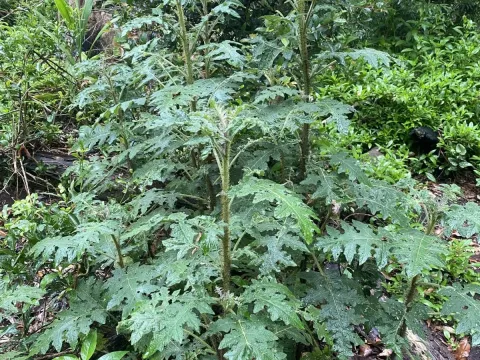
Solanum semiarmatum
Solanum semiarmatum
Solanum semiarmatum is a member of the Solanaceae family. As a perennial plant, it thrives when sown during the warmer months, ideally when soil temperatures consistently remain between 15 and 18 degrees Celsius.
What the section contains
Solanum semiarmatum
Seeds are typically sown in early spring. In regions with cooler climates, it is recommended to start the plants in a protected environment or greenhouse approximately 40 to 50 days before the final frost, ensuring a stronger start for the seedlings.
The seeds should be planted at a shallow depth of 1 to 1.5 centimeters. Maintaining consistent soil moisture is crucial for uniform germination, while avoiding overly waterlogged conditions that could impede the development of the root system.
Once seedlings emerge, they require significant light to prevent etiolation. Providing adequate spacing is essential as the plant develops, allowing for proper airflow and reducing the humidity trapped within the leaf canopy.
Natural propagation often follows seasonal rains when the soil is rich in nutrients and moisture. In an agricultural setting, replicating these conditions through controlled irrigation and fertilization will yield the most robust plant growth.
The plant prefers sunny locations with well-drained, fertile soil. It performs best in soils with a slightly acidic to neutral pH (6.0 to 7.0). Good drainage is non-negotiable, as water stagnation often leads to root rot in nightshades.
Solanum semiarmatum is a heat-loving plant, with an ideal temperature range of 22–28 degrees Celsius for active growth. Significant deviations below this range can result in stunted development and delayed maturity.
Consistent moisture is required throughout the growing season, particularly during the flowering and fruit-setting stages. Drought stress during these critical periods often leads to poor fruit quality and premature flower drop.
Fertilization should be managed based on the plant's development phases. A balanced NPK fertilizer is typically sufficient, though higher potassium levels are beneficial once the plant enters the reproductive stage.
The name "semiarmatum" refers to the plant's prickly nature. Growers must exercise caution and wear protective gear when performing maintenance, such as pruning or harvesting, to avoid injury from the thorns on the stems.
The economic or practical utility of Solanum semiarmatum is often tied to its chemical profile rather than traditional food production. Harvesting is focused on either mature fruit for seeds or vegetative biomass for extract production.
Yields are highly dependent on the quality of soil management and water consistency. In optimal conditions, the plant can produce substantial biomass, making it a viable subject for research into specific plant alkaloids.
Timing the harvest is critical; fruit should be collected as soon as it reaches full physiological maturity to ensure the chemical constituents are at their peak concentration. Over-ripening can sometimes alter the desired compound ratios.
In wild settings, the plant density is determined by local ecological competition. Under agricultural management, clearing weeds and providing adequate spacing significantly increases individual plant productivity and ease of access.
Post-harvest, the stems are often pruned back to encourage new growth in the subsequent season. This practice helps maintain the plant's health and ensures long-term viability in nursery or experimental field settings.
Like many Solanaceae, this species is susceptible to common nightshade diseases, including late blight and early blight. These fungal issues proliferate rapidly in humid environments with poor air circulation.
Common pests include the Colorado potato beetle, aphids, and spider mites. These insects can quickly colonize the plant, necessitating regular monitoring and early intervention through biological controls or compatible insecticides.
Viral infections, often spread by insect vectors, can cause leaf curling and systemic weakness. Rogueing (the removal of infected plants) is the standard method for preventing the spread of such diseases within a planting area.
Nematodes are a significant subterranean threat, particularly in soils that have been used for nightshade production continuously. Implementing a crop rotation strategy is essential for breaking the pest life cycle.
- Late Blight (fungal leaf lesions)
- Colorado Potato Beetle (defoliation)
- Aphids (sap-sucking pests)
- Root Rot (due to poor drainage)
Harvesting should be conducted with clean, sharp tools to avoid unnecessary damage to the plant, which could serve as entry points for pathogens. Due to the presence of thorns, protective gloves are essential for the harvester.
Vegetative material should be gathered during the peak of the growing season to ensure maximum nutrient density. Harvesting in the morning after dew has evaporated is best to prevent excessive moisture during storage.
Post-harvest processing involves drying the collected material in a shaded, well-ventilated area. Direct sunlight should be avoided, as it can degrade the sensitive chemical compounds present in the plant tissues.
Once dried, the product should be stored in a cool, dark place within breathable packaging (such as paper or cloth) to prevent the development of mold, which would render the harvest unusable.
Proper record-keeping regarding the harvest date and conditions is recommended for those growing Solanum semiarmatum for specialized uses, as the concentration of secondary metabolites can vary throughout the season.