
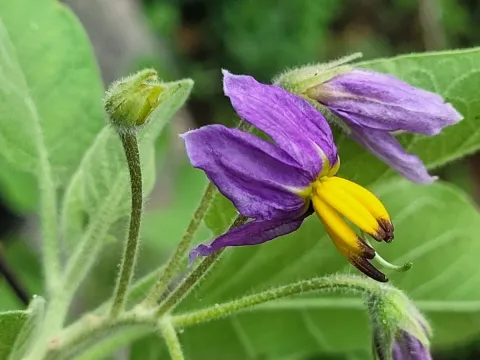
Solanum pubescens
Solanum pubescens
Solanum pubescens is a perennial shrub belonging to the Solanaceae family, primarily native to the tropical regions of India and Sri Lanka. This plant is recognized by its distinct pubescence, a dense layer of fine hairs on the stems and leaves, which serves as a protective mechanism against extreme solar radiation in its natural habitat.
What the section contains
Solanum pubescens
Regarding climatic requirements, this species thrives in temperatures ranging from 22 to 30 degrees Celsius. It is highly sensitive to frost, which limits its outdoor cultivation to tropical or subtropical zones, whereas, in temperate climates, it must be grown in controlled greenhouse environments to ensure survival and productivity.
The soil profile for this crop should be characterized by high drainage capacity and rich organic content. A loose, sandy loam substrate with a neutral to slightly acidic pH is ideal for promoting deep rooting and robust vegetative development throughout the plant's life cycle.
Agronomic management involves consistent irrigation practices that prevent soil saturation, which could lead to root rot or fungal infections. Nitrogen-rich fertilizers in the early stages of growth followed by potassium-focused feeding during the reproductive phase are essential for achieving optimal development.
Economically, Solanum pubescens is valued for its potential in pharmaceutical research and as a genetic reservoir for breeding more resilient varieties of Solanaceous crops. Its unique physiological traits make it a subject of continuous interest for botanists investigating plant adaptation in extreme heat.
Common agricultural pests affecting Solanum species, including Solanum pubescens, are aphids and spider mites, which can cause significant damage to young foliage by feeding on plant sap and spreading secondary infections.
Fungal pathogens such as powdery mildew represent a significant threat, especially in environments where humidity levels are poorly regulated and air circulation is insufficient within the canopy.
Root rot caused by Phytophthora species is a major risk factor if irrigation management is not strictly controlled, leading to rapid wilting and eventual death of the plant in poorly drained soils.
Integrated Pest Management (IPM) strategies, including the use of sticky traps and beneficial predators, are recommended to control insect populations while minimizing the environmental impact of chemical pesticide applications.
Regular monitoring of leaf undersides and stem tissue for early signs of disease or pest infestation remains the most effective method for maintaining plant health in any intensive farming operation.