
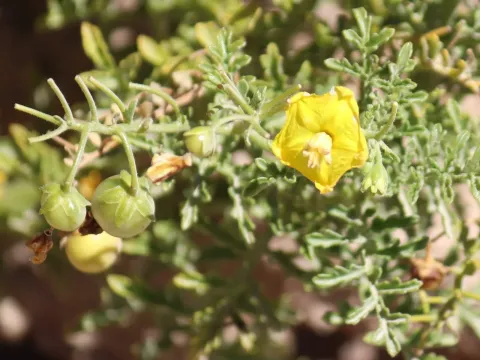
Solanum sitiens
Solanum sitiens
Solanum sitiens, commonly referred to as the desert nightshade, is a perennial shrub belonging to the Solanaceae family. It is recognized as a significant wild relative of the cultivated potato, known for its extreme environmental adaptability.
What the section contains
Solanum sitiens
The native distribution of this species is restricted to the arid regions of northern Chile. It thrives in high-altitude, desert-like environments where rainfall is scarce and climatic conditions are harsh for most vascular plants.
The plant requires specific soil conditions, thriving in rocky, well-drained substrates. Its agricultural significance is defined by its ability to survive long periods of drought, maintaining its physiological functions when other species would perish.
Morphologically, Solanum sitiens features specialized foliage with trichomes (hairs) that reflect solar radiation and reduce water loss. These adaptations are a direct result of millions of years of evolution in the Atacama desert region.
In agriculture, the primary use of this plant is as a source of germplasm. It provides unique genes for drought resistance, which are highly sought after by potato breeders worldwide to combat the effects of climate change.
This species possesses innate resistance to several common pests and diseases of the Solanaceae family. Its chemical profile, which includes unique alkaloids, serves as a natural barrier against many typical agricultural herbivores.
However, when these plants are maintained in greenhouses for research, they may become vulnerable to specific pathogens like root rot if the substrate drainage is not perfectly managed to mimic their natural habitat.
While the species is hardy, it faces threats from the loss of natural habitats. Conservation efforts are necessary to preserve the genetic diversity present in wild populations found in the Andes and coastal deserts.
Potential threats during cultivation include non-adapted fungal pathogens that can proliferate in conditions where the plant's metabolic stress is altered. Maintaining low moisture levels is the key to preventing most biotic threats.
Effective management of Solanum sitiens involves strict environmental control. It is not a commercial crop for mass cultivation, but rather a vital component of agricultural research aimed at securing food supplies for the future.