
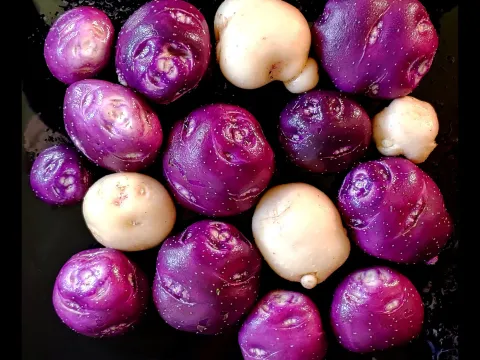
Solanum curtilobum
Solanum curtilobum
Solanum curtilobum is a distinctive species of cultivated potato within the Solanaceae family. This species is recognized as a hybrid derivative, evolved from ancestral Andean potato types to thrive in challenging environments.
What the section contains
Solanum curtilobum
The plant originates from the high-altitude regions of the Andes, specifically cultivated in Bolivia and Peru. It is uniquely adapted to survive at elevations where standard potato varieties fail due to extreme climatic conditions.
Botanically, this plant displays strong vigor and structural resilience against low temperatures. It is one of the few potato species that demonstrates significant frost tolerance, a trait essential for survival in mountainous climates.
For cultivation, it requires well-drained, nutrient-rich soils that do not retain excess water. The plant performs best in environments with high diurnal temperature variations, which are typical for the high Andean plains.
Effective agrotechnical practices for this crop focus on hill cultivation and protection of the foliage from severe frost events. The species remains a cornerstone of traditional agriculture in its native range.
The harvest period is typically determined by the cessation of the short growing season. Tubers are gathered once the foliage begins to senescence naturally, ensuring the plant has completed its cycle.
Traditional harvesting methods involve manual digging, which helps to protect the delicate tubers from mechanical damage. Careful handling during the harvest is crucial to ensure long-term storage quality.
Post-harvest, the tubers are often subjected to freeze-drying processes (known locally as chuno) to maximize shelf life in the harsh mountain climate. This traditional processing is vital for food storage.
Storage should occur in cool, dark, and well-ventilated areas to prevent spoilage. Controlled environments are necessary to maintain the nutritional integrity of the tubers throughout the winter months.
Yield capacity is moderate compared to commercial varieties; however, the reliability of the harvest in cold regions provides an essential nutritional buffer for high-altitude populations.