
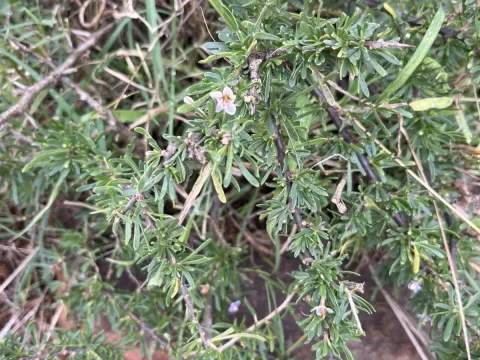
Grey boxthorn
Lycium cinereum
Grey boxthorn (Lycium cinereum) is a perennial shrub belonging to the Solanaceae family. It is recognized for its extraordinary hardiness and ability to thrive in challenging environments where typical crops fail to establish.
What the section contains
Grey boxthorn
Originating from arid regions in Africa and parts of the Middle East, this plant is well-adapted to high temperatures and sporadic rainfall. It naturally occurs in sandy, stony soils and serves as an important ecological stabilizer in its native habitats.
The plant thrives in full sun exposure. It displays remarkable tolerance to soil salinity and drought, making it an excellent candidate for the rehabilitation of degraded or abandoned agricultural lands in arid zones.
Morphologically, it is a dense, thorny shrub with small leaves adapted to water conservation. Its root system is extensive and deep, allowing the plant to access moisture levels that are out of reach for many other vegetation types.
Agronomic management is minimal. Once established, Lycium cinereum requires very little human intervention. It does not need frequent irrigation or fertilizers, as it is evolved to optimize its growth under low-input agricultural conditions.
Grey boxthorn is naturally resistant to many common agricultural pests and diseases. The primary concern in a cultivation setting is over-irrigation, which can lead to root rot if the soil does not have adequate drainage properties.
Powdery mildew can occur in stagnant air environments. Planting with sufficient spacing and promoting natural airflow through the shrub canopy is essential for keeping the foliage healthy throughout the growing season.
Spider mites are potential pests during extreme dry spells. While the plant is hardy, heavy infestations can reduce its vigor. Early detection and treatment with neem oil or other bio-pesticides can effectively manage the issue.
Aphids might occasionally feed on young, succulent growth during the early spring. Usually, natural predators are sufficient to keep populations in check without the need for synthetic chemical applications.
General hygiene, including the removal of dead or broken branches, is the most effective way to prevent the buildup of pathogens. This practice ensures that the shrub remains healthy and productive for many years.